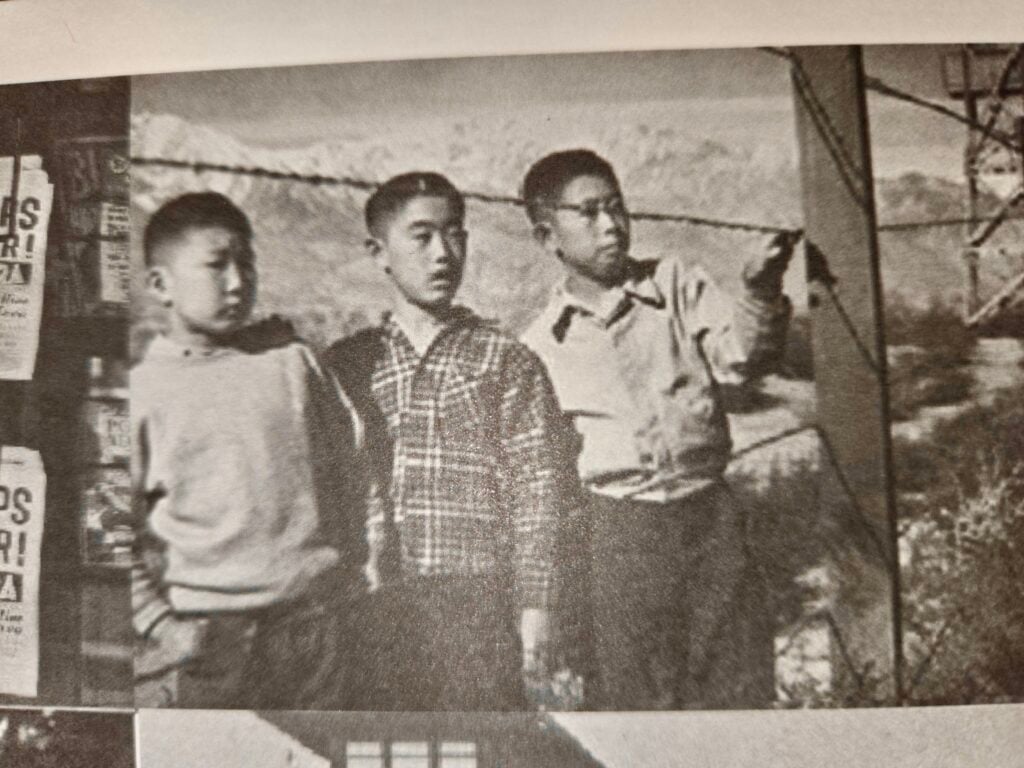
A relatable story of immigration and incarceration is retold at a gathering of Japanese Americans, many of whom grew up at Seabrook Farms.
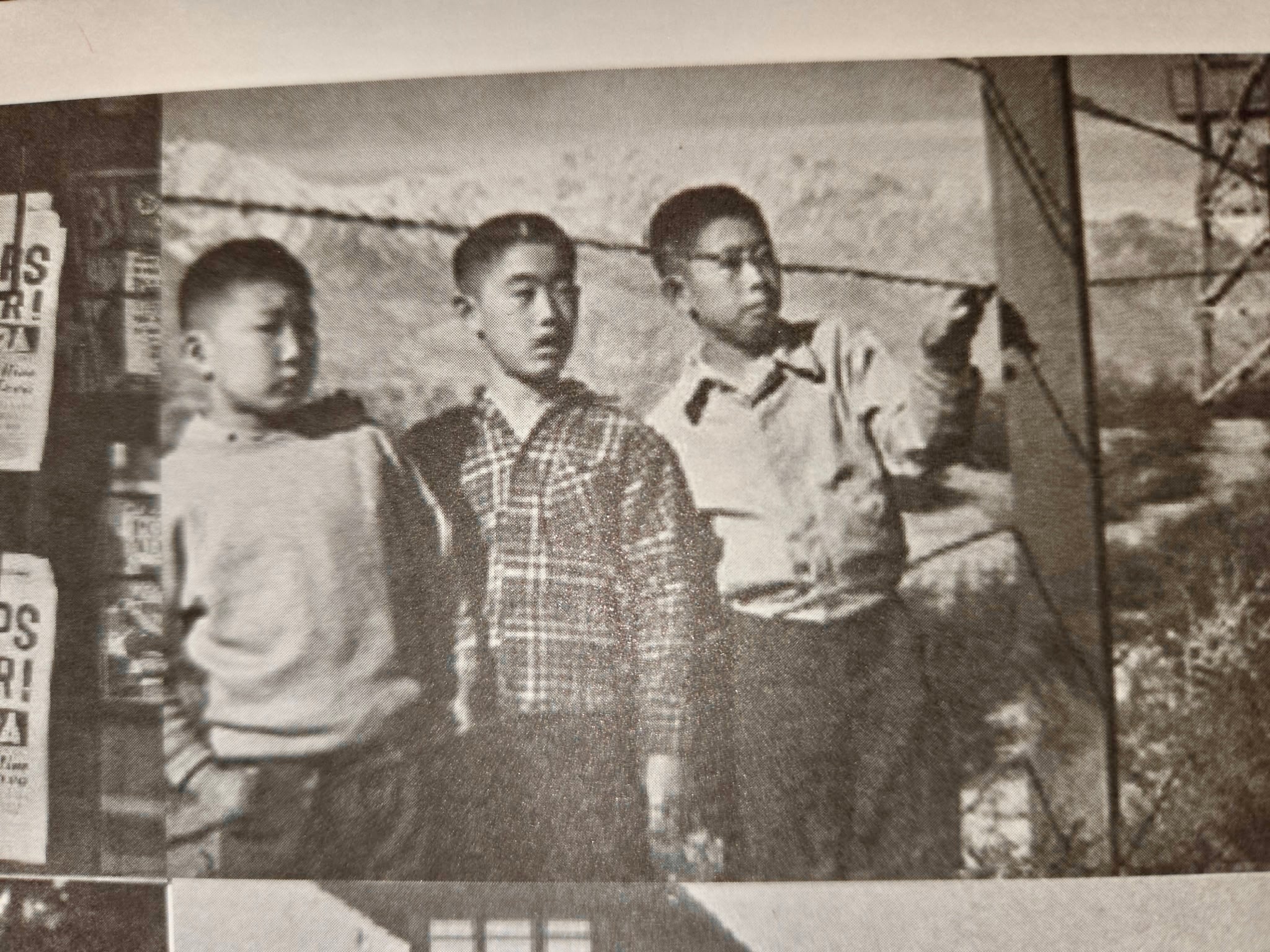
Takeshi Furumoto was born in a prison camp. The 81-year-old started life in the barren wasteland of Tule Lake in northern California, one of 10 desolate locations in which the U.S. government quietly banished Japanese and Japanese Americans who were declared “enemy aliens” for the crime of their heritage.
Today, he is on a mission to teach others about the history of that injustice, in the hope that others—born and yet unborn—will not endure a similar fate.
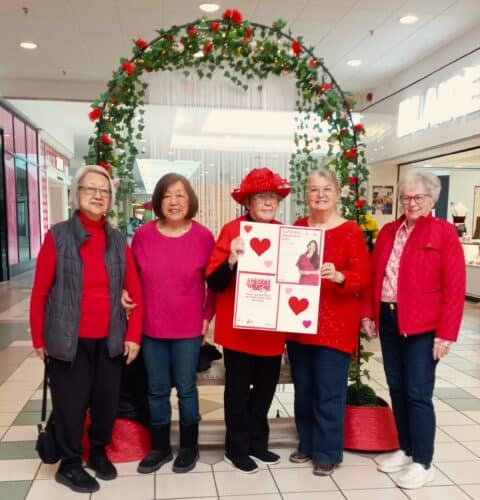
It’s how he found himself in the basement of the Seabrook Buddhist Temple recently, telling his story to guests. Furumoto’s speech in Cumberland County observed the 84th annual “Day of Remembrance,” which marks the anniversary of President Franklin D. Roosevelt’s Executive Order 9066, signed on February 19, 1942.
A simple stroke of Roosevelt’s pen stripped freedom and property from 126,000 people.
The event was sponsored by the Seabrook Chapter of the Japanese American Citizens League (JACL) and the Seabrook Educational and Cultural Center (SECC).
Roosevelt’s order, signed just weeks after the bombing of Pearl Harbor, allowed the federal government to segregate and incarcerate mostly Japanese Americans—as well as those who happened to be Japanese. Those ordered into camps had 10 days to sell everything they owned, taking with them only two suitcases.
Like Furumoto’s father, most lost everything.
Once released from the camps, thousands like the Furumotos were forced to start over. Some—about 2,500—made the choice to relocate to a frozen produce plant complex in Seabrook, Upper Deerfield Township.
For the baby born behind barbed wire, his life would take a different path.
Tak’s story: Furumoto’s parents were first- and second-generation Japanese Americans. Together with a partner, his father operated a successful wholesale produce business in Los Angeles.
Furumoto, known to his friends as Tak, said his father began working as a migrant laborer. Through his street smarts, his father became a truck driver and then joined up with a friend, Kikuo Ooka, and started their business.
It became quite successful, allowing him to own a car and live in a nice house. Life was comfortable for the Furumoto family.
“Then war broke out, and the executive order was signed by Roosevelt that gave them the right to imprison us,” Tak said.
It also gave the federal government the right to confiscate all the assets he worked so hard to earn for all those years in East Los Angeles.
That was insult enough. But then came the government’s loyalty questions.
The first question asked if they would be willing to join the military and serve in combat. The second queried if they would disavow loyalty to the Japanese emperor or any foreign government. Most of those who answered “no-no” were sent to Tule Lake, the only maximum-security camp of the 10 established, which also was under martial law and secured by a battalion of 1,000 military police.
“He said no because they had taken away all his business and wealth,” Tak said. “Also, he had four daughters to support, and they would have nothing if he left.”
When Tak was born in 1944, he and the other infants born there got a new nickname.
“I’m known as a no-no baby,” he said.
As for the second question, Furumoto’s parents lived in Hiroshima and managed to survive the atomic bomb on August 6, 1945. Answering yes could have meant he would never be able to see them again.
When Tule Lake was finally closed in 1946, Tak’s father took the family and returned to Hiroshima to check on his parents. What they did not realize was that leaving for Hiroshima meant they would not be able to return to their home in LA. Furumoto calls it a “tacit deportation.”
Later, an older sister turned 21 and was able to return to her home in the U.S. through a loophole in the law. She worked to save money, and five years later, the whole family was able to reunite in L.A.
‘Raised in Hiroshima, Fought in Vietnam’: Tak’s early childhood in Hiroshima was surrounded by grandparents and friends who were “hibakusha,” or survivors of the atomic bombs.
Years after the family returned to East Los Angeles, Tak still felt the sting of racism in his neighborhood. He made the choice to enlist in the Vietnam War where he served with honor. He left with a Bronze Star Medal, and a severe case of PTSD that haunted him.
His story was detailed in NHK World’s documentary, Raised in Hiroshima, Fought in Vietnam, by Mayu Nakamura. In it, the director tells the story of Tak’s childhood in Hiroshima, postwar America and his service in Vietnam.
The veteran is often asked why he would want to volunteer.
“I get that question all the time. I had no place to go. This was my home,” he tells a woman in the audience who posed the question. “This is our country. We cannot give up.”
Another visitor asks him how long it took him to recover from the PTSD caused by his years in the Vietnam War.
Tak turns to his wife. “I dunno. Am I okay, now?”
His audience laughs, then he turns serious.
“My wife got me through it,” he said. “It was hard. I didn’t know I was crazy. I thought I was normal. I thought I was okay.”
Furumoto said he felt a little like Forest Gump, who ran across the country after his time in the Vietnam War.
“I drove across the country from California to Fort Lee, New Jersey,” he said.
‘I know who you are’: In the 1970s, Furumoto and his wife Carolyn started New York City’s first Japanese-American realty business which catered to Japanese businessmen and diplomats who had interests in New York City. In the 1980s, Furumoto’s business boomed.
In 2010, Elizabeth Tamiko Ooka walked into the Furumoto Realty on a sales call. She met Tak’s wife, Carolyn, and handed her a business card.
“Her head tilted to the left,” Ooka recalled. “’Can you come back tomorrow?’” Carolyn asked her. When she returned, Tak was there to greet her.
“You don’t know who I am, but I know who you are,” Furumoto said, smiling.
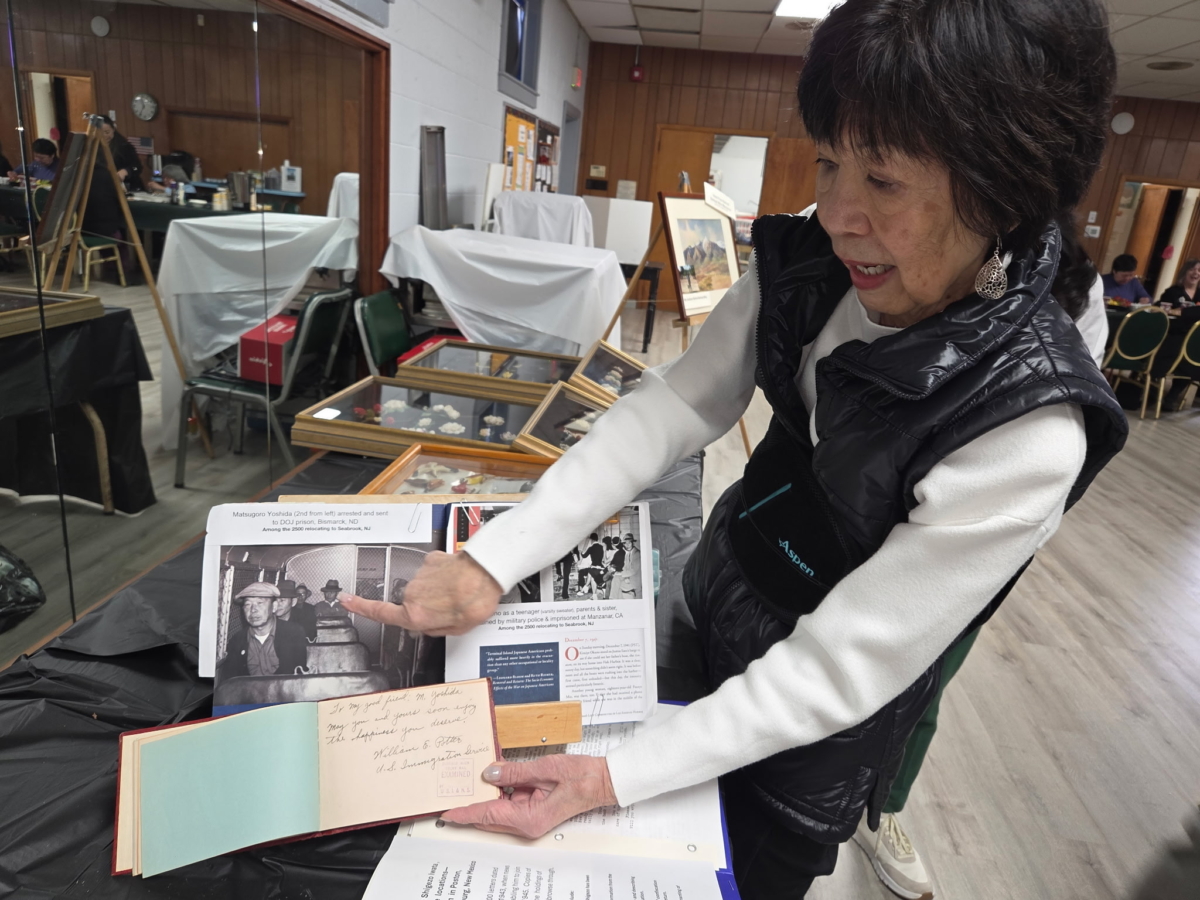
He opened up a family album. “Do you know this photo?” he asked her.
Yes. Yes, she did. “That’s my grandfather’s produce shop,” she told Tak.
Show me where your grandfather is, he asked her. She pointed. “Do you know who that man is,” Tak asked, pointing to a man standing next to her grandfather.
“That’s my father,” he said.
Tak and Carolyn had been looking for a successor for the real estate business, which this year is marking its 52nd year in New York City. The Furumotos made the decision to pass their business along to the granddaughter of the man who started the produce business with his father all those years ago.
Fate.
“I just want to do a good job and pass along the history, for the legacy of our family,” Ooka said.
Ooka, who lives in North Jersey, paid tribute to the Seabrook community.
“I visited Seabrook when I was 11 or 12 years old,” said Ooka, whose grandfather and father relocated there after being released from the Manzanar incarceration camp in California. “Seabrook is home away from home.”
Spreading peace: Tak paid tribute several times to the people of Minnesota, who stood up against ICE activities.
But it also made him wonder.
“Finally, Americans are standing together to safeguard the Constitution. But we were secretly tucked away all over the United States,” he said of the 126,000 people incarcerated by the federal government for their race.
“I wonder,” he asked the visitors. “I wonder if it was 1942, if American citizens would come and protect us.”
Tak, Carolyn, and Ooka traveled together to South Jersey for the recent gathering at the Buddhist temple.
Tak has told his story on The Oprah Winfrey Show, and is included in a nonfiction book by Charles Pellegrino, The Ghosts of Hiroshima,” which is being made into a motion picture by Titanic director James Cameron. The book is a ‘you-are-there’ account of the atomic bombing, using 200 interviews.
Tak talks to 8th graders, to graduate students, to anyone who will listen. He makes 20 to 30 appearances a year. He has no plans to slow down.
“This year is more important because what happened 84 years ago is happening again,” he said.
Americans need to continue to stand up, like those in Minneapolis.
“Look at Minneapolis, Minnesota,” Tak said. “ICE agents are gone. You know who did that? Us.”
Seabrook Farms Film to be Shown at Landis Theater, Filmmaker and Seabrook’s Grandson on Panel
The Vineland Historical and Antiquarian Society will present The Paradox of Seabrook Farms at the Landis Theater on Sunday, April 12 at 2 p.m.
It’s an engrossing documentary by Dutch Estonian filmmaker Helga Merits, which tells the story of Seabrook Farms, the biggest industrial vegetable producer in the United States in the 1950s, where a diverse workforce of post-World War II European refugees, interned Japanese Americans and African Americans lived and worked. The stories of those laborers, and the vibrant multicultural community it both harbored and exploited, are highlighted in the film.
Merits will lead a panel discussion following the screening. Writer John Seabrook, grandson of patriarch C.F. Seabrook, will participate in the discussion and sign copies of his book, The Spinach King.
Doors open at 12 noon to allow audience members to mingle and visit cultural and heritage organizations that will be participating in this event.
Tickets are $15.
https://www.zeffy.com/en-US/ticketing/the-paradox-of-seabrook-farms-movie-event