New Jersey’s Laws among Nation’s Best in Protecting Free Speech against Frivolous Lawsuits
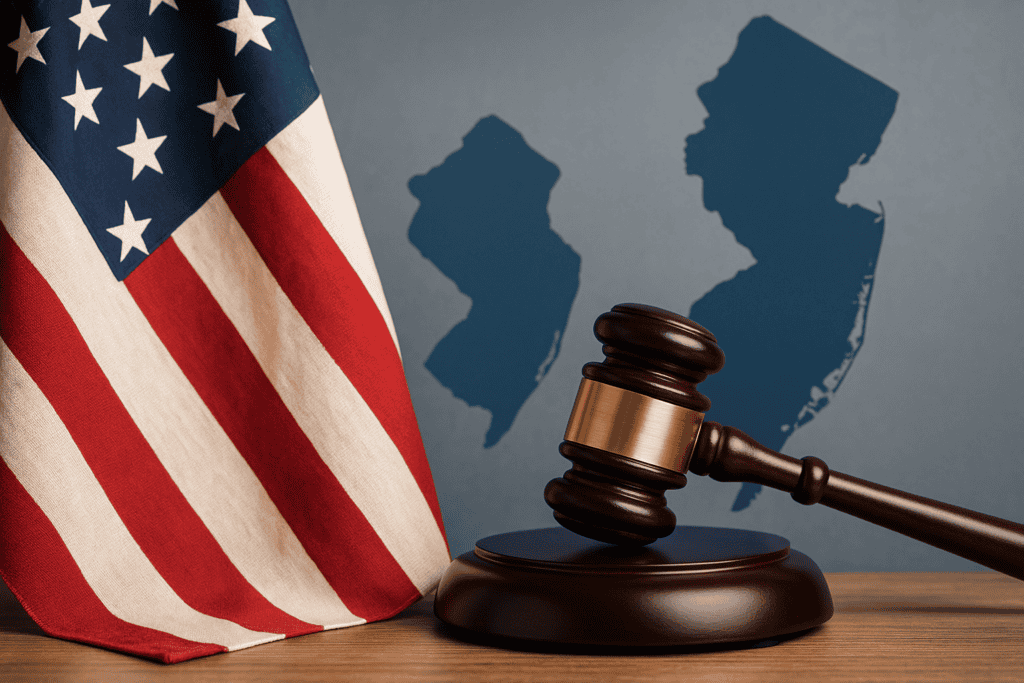
New Jersey’s laws protecting against costly, meritless, speech-suppressing lawsuits are among the strongest in the country, earning it an “A” grade.
That’s a key takeaway from the 2025 Anti-SLAPP Report Card, just released by the Institute for Free Speech.
The new report details and rates state-by-state legal protections against a type of lawsuit known as a “SLAPP,” which stands for “strategic lawsuit against public participation.” Unscrupulous plaintiffs abuse the legal system by using SLAPPs to prevent speakers from exercising their First Amendment rights, suppressing, punishing, or chilling speech that the plaintiff doesn’t like. Such a litigant typically claims that the speech constitutes defamation, suing speakers to harass, silence, or force them to bear significant litigation costs.
Anti-SLAPP statutes provide protections against these suits, but the strength of those protections varies widely from state to state. The Institute’s new report shows a remarkable trend toward more and stronger anti-SLAPP laws. Here are the key findings about New Jersey specifically. New Jersey:
- rates among the best states in the country, with an overall grade of “A”
- earns an overall score of 97 out of a possible 100 points, ranking 4th out of 50 states
- earns a covered speech subgrade of 100, which assesses the breadth of the types of speech its anti-SLAPP law covers
- earns an anti-SLAPP protection subgrade of 92, related to the availability and usefulness of anti-SLAPP features of the law, such as a requirement that speakers who win an anti-SLAPP motion get reimbursed for their attorney’s fees
The report reveals unprecedented progress nationwide, with nearly 63% of Americans now having good anti-SLAPP protection (a grade of “B” or better) in state courts. For the first time, a majority of the country’s population (56%) enjoys the protection of an “A” grade law. Yet, many states still have weak laws or no laws protecting their citizens from SLAPP suits, putting those Americans’ rights to speak or publish at significant risk.
Thankfully, New Jersey has one of the stronger anti-SLAPP laws in the country, and more and more states are adopting better anti-SLAPP laws. One catalyst for improvement has been the respected and nonpartisan Uniform Law Commission’s model anti-SLAPP law, which has already helped lead to excellent new or revised laws in twelve states (including Delaware) since the 2022 Report Card.
Top-line points in the report include:
- For the first time, a majority of the country’s population (56%) enjoys the protection of a law with an “A” grade on the Institute’s rating scale
- In all, 25 states now have some form of “A” grade (including Delaware)
- Also for the first time, nearly 63% of the American population resides in a jurisdiction with a good anti-SLAPP law, meaning a grade of “B” or better
- The number of states with “B” grade or better laws in 2018 was just 12. Today, there are 28 such states (including Delaware). That represents a 133% increase
- 86.2% of the American population is now covered by some kind of anti-SLAPP law, yet another record high
- Since the 2023 report, ten states have raised their anti-SLAPP scores by adopting or improving laws, including Ohio, Minnesota, Pennsylvania, and, most recently, Illinois (including Delaware).
- Despite political polarization, these new speech-protective laws usually pass with overwhelming bipartisan support that is often unanimous
- Three states plus D.C. fall in the “B” range
- Four states have “C” grades
Despite the overall positive trend, millions of Americans still live in states that woefully lag behind. Six states have a grade in the “D” range, while at least 12 states receive “F” grades for having no anti-SLAPP law at all. This disparity leaves them to endure meritless, speech-suppressing lawsuits without the essential legal protections enjoyed by their fellow Americans in states like New Jersey.
“The pace of continued progress in protecting more and more Americans’ free speech rights is astonishing. Yet, there are still far too many states in which wealthy plaintiffs can silence critics with the threat of financial ruin,” said Institute for Free Speech President David Keating, also one of the report’s co-authors, along with Helen Knowles-Gardner and Dan Greenberg. “States can easily fix this problem by enacting strong anti-SLAPP laws. These laws are one of the most effective tools available to protect free speech, and every state should adopt one that covers all speech about matters of public concern.”
The wide range of beneficiaries of robust anti-SLAPP laws like New Jersey’s demonstrates their importance for protecting free speech in myriad contexts. Anti-SLAPP laws have helped protect the speech rights of journalists, environmental activists, citizens speaking at government meetings, conservative Christians, Hollywood filmmakers, scientists, people leaving Yelp reviews, people who post on social media, podcasters, anti-abortion groups, labor unions, public officials, community advocates, and more.
The broad impact of SLAPPs, punishing and suppressing speakers of all kinds, is one reason strong anti-SLAPP laws usually enjoy overwhelming and often unanimous bipartisan support when adopted.
“The recent wave of states adopting stronger anti-SLAPP laws shows that lawmakers increasingly recognize the importance of protecting their constituents from these dangerous lawsuits,” said Institute for Free Speech Research Director and report co-author Helen Knowles-Gardner. “Now the remaining states should catch up and provide their residents with these essential legal protections.”
Keating added, “The two biggest gaps left in protection against SLAPPs are the states with weak or no laws and the lack of a federal anti-SLAPP statute. Even in states that have adopted strong anti-SLAPP laws, large portions or sometimes all of a state’s laws often don’t apply in federal court. A federal law is also needed to prevent deep-pocketed censors from using lawfare in federal court. We hope that the remaining ‘D’ and ‘F’ states will soon adopt strong laws, and that Congress will also move quickly to pass an anti-SLAPP law that provides an essential safeguard for free expression.”
The full report, including a detailed breakdown of each state’s laws and accompanying score, is available here. It covers laws enacted or bills unanimously approved by a legislature before August 22, 2025.
Note that the Delaware score and grade reflected in the report are based on a bill that unanimously passed the legislature but, as of this writing, has not yet been signed by the governor. We anticipate that this will happen soon. If the governor does not sign or veto the bill within 10 days after receiving it, the bill becomes law without his signature.