Trump Secures $7B Gaza Pledges and Troop Commitments at Peace Summit
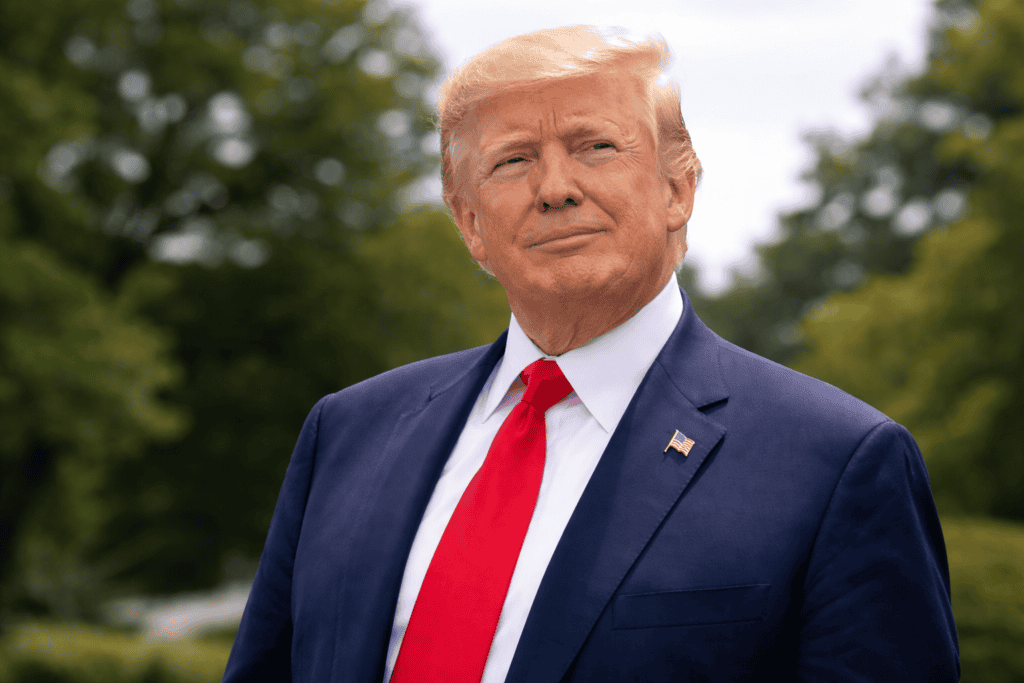
President Donald Trump announced Thursday at the inaugural meeting of the Board of Peace that nine countries have pledged $7 billion toward a Gaza relief and reconstruction package and that five nations have committed troops to an international stabilization force for the Palestinian territory after two years of war between Israel and Hamas.
The governments pledging financial support are Kazakhstan, Azerbaijan, the United Arab Emirates, Morocco, Bahrain, Qatar, Saudi Arabia, Uzbekistan, and Kuwait. The amount committed so far represents a portion of the estimated $70 billion required to rebuild Gaza after the conflict.
In addition to international pledges, Trump said the United States would commit $10 billion to the Board of Peace. He did not provide details about how the funds would be allocated. The source of the U.S. funding was not identified, and congressional approval would be required. No schedule was given for when either the funding or troop deployments would begin.
On the security front, Indonesia, Morocco, Kazakhstan, Kosovo, and Albania agreed to send troops to take part in the stabilization force. Egypt and Jordan committed to training police personnel for the mission. Deployment will begin in Rafah, described as a largely destroyed and mostly depopulated city that is under full Israeli control. The U.S. administration plans to concentrate its initial reconstruction efforts there.
Maj. Gen. Jasper Jeffers, who heads the newly established International Stabilization Force, said the plan calls for 12,000 police officers and 20,000 soldiers in Gaza. He described the deployment as an initial move aimed at providing the territory with security following the October ceasefire.
Addressing the assembled delegates, Trump thanked participating nations for their financial commitments. “Every dollar spent is an investment in stability and the hope of a new and harmonious (region),” he said.
The Board of Peace was created under Trump’s 20-point plan designed to end the Gaza conflict. Since the October ceasefire, he has expanded the board’s intended function beyond Gaza, saying it should also work to resolve conflicts in other parts of the world. That expanded role has led to concerns among some countries that the body could compete with the United Nations.
Trump dismissed those concerns. “Someday I won’t be here. The United Nations will be,” he said, adding that he believes the organization “is going to be much stronger, and the Board of Peace is going to almost be looking over the United Nations and making sure it runs properly.”
The gathering in Washington drew participation from more than 40 countries, and the European Union, with nearly 50 governments represented overall. Germany, Italy, Norway, Switzerland and the United Kingdom were among more than a dozen countries that attended as observers without formally joining the board. While most nations sent senior officials, Indonesian President Prabowo Subianto, Argentine President Javier Milei, and Hungarian President Viktor Orbán traveled to Washington in person.
Trump expressed confidence that additional countries would participate in the future. “Almost everybody’s accepted, and the ones that haven’t, will be,” he said.
Developments in New York unfolded alongside the Washington meeting. The U.N. Security Council convened a high-level session on Wednesday to address the ceasefire agreement and Israel’s efforts to expand control in the West Bank. That meeting had originally been set for Thursday but was rescheduled after the Board of Peace session was announced for the same day, which would have complicated travel plans for diplomats seeking to attend both events. Vatican Secretary of State Cardinal Pietro Parolin said earlier in the week that “at the international level it should above all be the U.N. that manages these crisis situations.” The Trump administration responded to those comments. French Foreign Minister Jean-Noël Barrot posted on X that the European Commission should not have attended the Washington meeting because it lacked a mandate.
A central issue in the discussions was the requirement to disarm Hamas, which Israel has identified as a key condition for reconstruction and a core element of the ceasefire agreement. Hamas has given little indication that it is prepared to surrender its weapons. A U.S. official, speaking on condition of anonymity because they were not authorized to comment publicly, said the administration is “under no illusions on the challenges regarding demilitarization” but has received encouraging reports from mediators.
Israeli Prime Minister Benjamin Netanyahu, speaking from a dusty army base in southern Israel, reiterated that “there will be no reconstruction” in Gaza before demilitarization takes place. During the Washington meeting, his foreign minister, Gideon Saar, stated that “there must be a fundamental deradicalization process.”
Secretary of State Marco Rubio addressed the workload ahead, saying, “There’s a lot of work that remains that will require the contribution of every nation-state represented here today.”
Among the leaders offering praise during the meeting was Pakistani Prime Minister Shehbaz Sharif, who described Trump as the “savior of South Asia.” Turkish Foreign Minister Hakan Fidan said Turkey is prepared to contribute troops to the stabilization force.
Trump also spoke about Iran as tensions continue between Washington and Tehran. The United States has ordered one of the largest military buildups in the region in decades. One aircraft carrier group is already deployed, and another is en route. Trump warned that Iran would face American military action if it did not denuclearize, abandon ballistic missiles, and stop financing extremist proxy groups such as Hezbollah and Hamas.