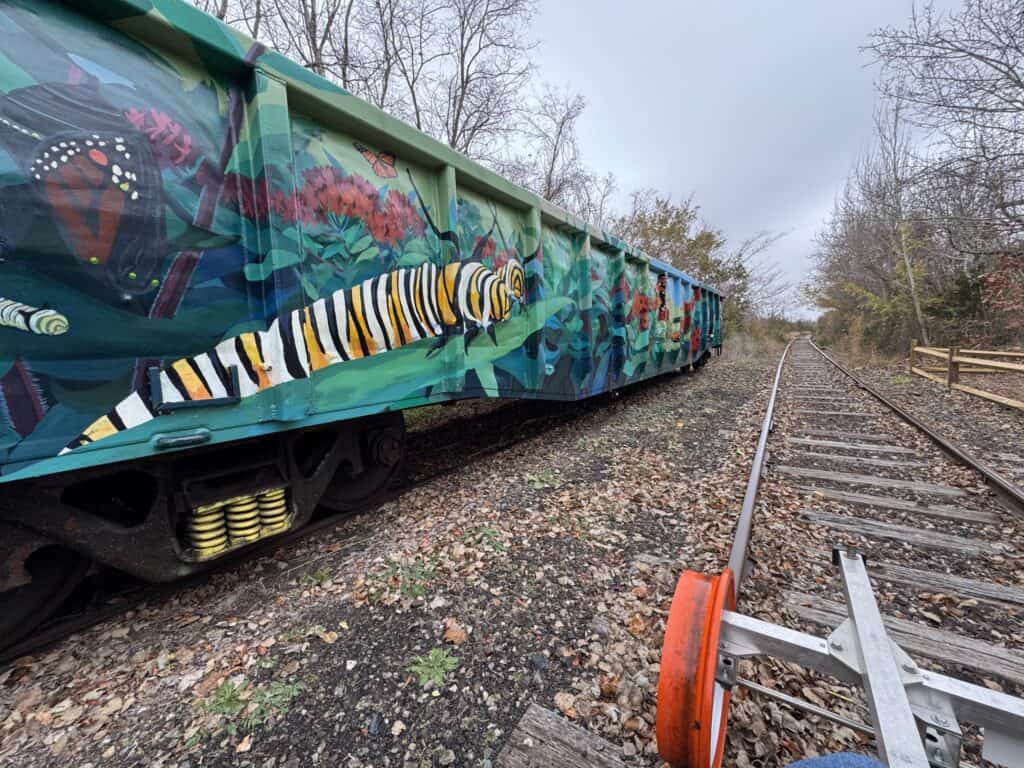
Trackside near the Garrett Family Preserve are old freight cars painted by muralist Alex Lebron depicting the life cycle of the monarch butterfly. Photos: J. Morton Galetto
An open-air, hands-free bike tour makes use of abandoned rail lines to immerse you in the great outdoors.
It was a cold and misty morning, a few days after Thanksgiving, when my excursion buddy and I headed to Cape May for a unique experience. A few weeks ago we shared our Woodstown Central Railway pumpkin train ride. In keeping with the rails theme we tried out a different track. As I’m sure you are aware, around the country railroad tracks have been removed and pedestrian and bicycle paths have been put in their place. In this adventure the tracks are still in play for a different recreational experience.
Since our country will soon celebrate our 250th year as a nation, you could say we employed a different kind of revolution at America’s oldest seaside resort, Cape May, New Jersey. We braved the chilly weather to try out a bit of pedal-power at the Revolution Rail Company. Here the only revolutions we made were with our tootsies, not on bicycles but rather on “rail bikes.” These aluminum-framed two-and-four-seaters allow tourists to pedal down the track under their own power.
There are lots of advantages to this hands-free mode of travel. We were able to take photos, something that you can’t easily do on a bicycle or kayak without abandoning your propulsion. Rail bikes also enable you to brake to a full stop, of which we made many—to tally bird species and enjoy some marsh and pond views.
The distance we covered was a bit less than two miles out and two miles back. The pedaling was extremely easy, the seats were comfortable, and they adjusted to one’s leg length.
The railway parallels Elmyra Street and Seashore Road to the west, with the east side being flanked by wetlands, the Nature Conservancy’s 180-acre Garrett Family Preserve, and protected farmland. We began our trip at the Visitor Center on Lafayette Street and travelled north to the Cape May Canal, where Jake Cuomo, our tour guide and the general manager, reset our rail bike for the return trip.
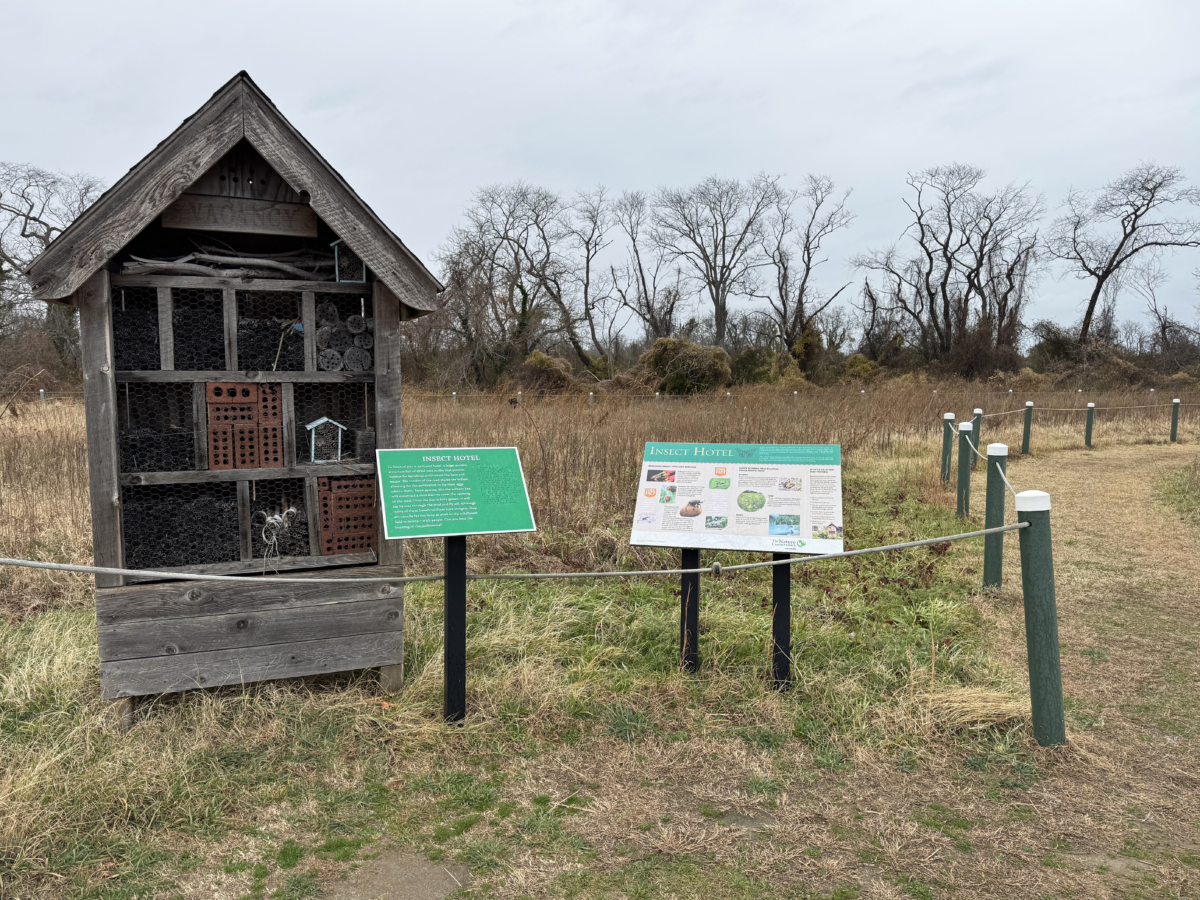
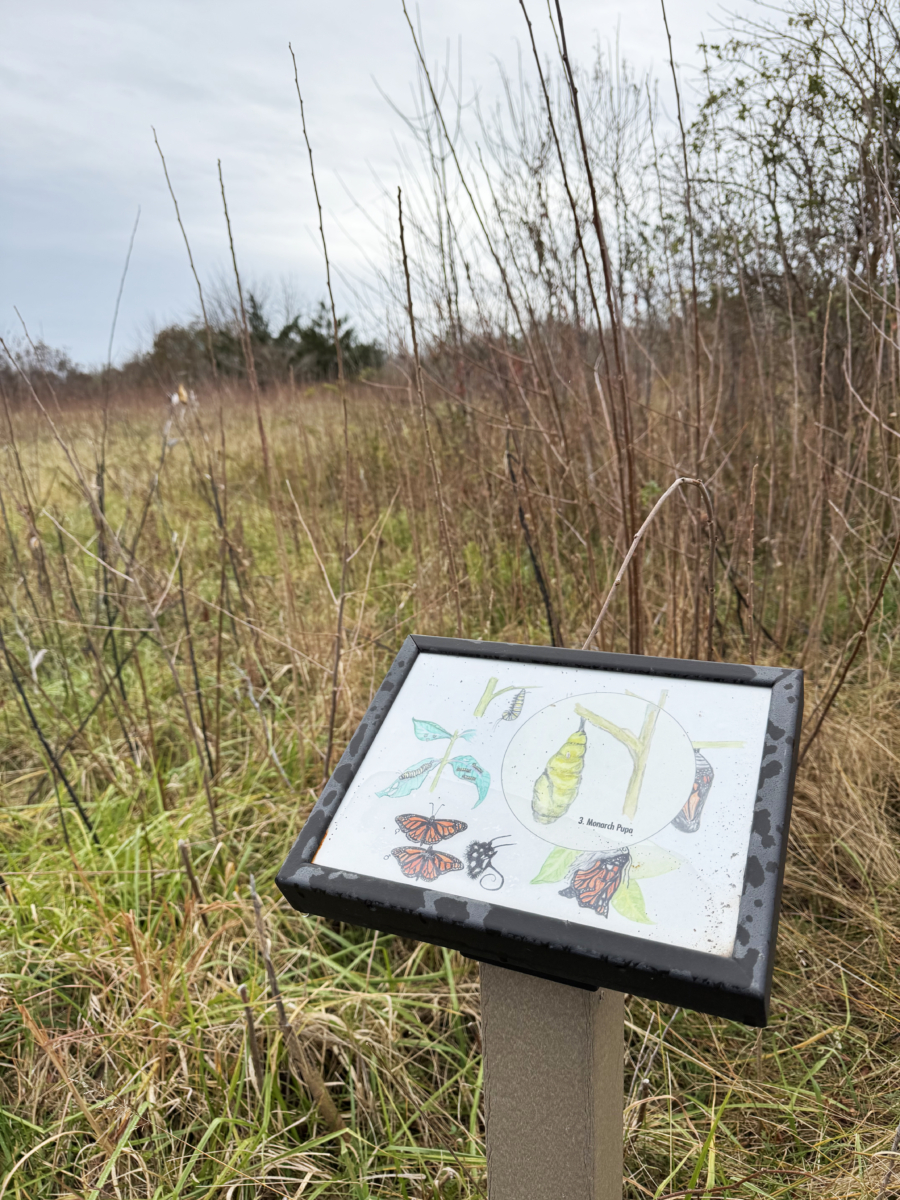
Braille trail and insect hotel at the Garrett Family Nature Conservancy Preserve. The rope allows visually impaired people to navigate a trail. Trailside signs illustrate the stages of a monarch’s development.
The habitats we traversed included coastal scrub, salt marsh, wildflower meadows, farmland, ponds, and creeks (primarily Cape Island Creek). Red cedars are clearly trying to populate the track and Cuomo said the staff will spend the off months trying to keep the track passable.
He is proud of the fact that the operation is “green and sustainable, and that it makes use of an unused railway,” thereby giving it purpose. In addition, it allows people to see places they would otherwise be unable to experience. I especially liked how quiet it was.
Alongside a coastal pond we saw mallards, ring-necked ducks, and a lesser scaup. Cuomo said they often see wood ducks along the edges of the pond. Some other species we observed were Cooper hawks, tree swallows, white-throated sparrows, American robins, vultures, herons, a raven, a rail, and lots of yellow-rumped warblers. Jake mentioned that he sees ravens rather often at Cape May Point and in fact had awakened to one that day.
Cape May isn’t new to Jake; he is a retired Coast Guard chief warrant officer, and he is also a native of New Jersey. He introduced us to the mechanics of the rail bikes before our nearly four-mile round trip. A rotating railway bridge has been left in the open position, allowing boats to pass but truncating our rail journey. In an effort to further orient you, had it been operable we could have travelled northward to Cold Spring Village.
About midway on the return trip we visited the Garrett Preserve. It includes vistas of Cape Island Creek and a perimeter trail that is a 1.3-mile loop; in all there are about four miles of paths. May, August, and October are the busiest times for visitors. In May the spring migration of birds is a highlight, while August is likely busy because it is the peak of tourism in Cape May. October is the shoulder season and the weather, foliage, and return of wintering migrants coalesce to draw tourists. The first two weeks of October are also the height of monarch migration at the Point.
Cuomo mentioned that both black- and yellow-billed cuckoos breed in the park from spring until early September. The grasslands at the preserve are bordered by trees with lots of perching and nesting opportunities. These trees shade much of the perimeter trail, likely offering some relief from the sun in spring and summer.
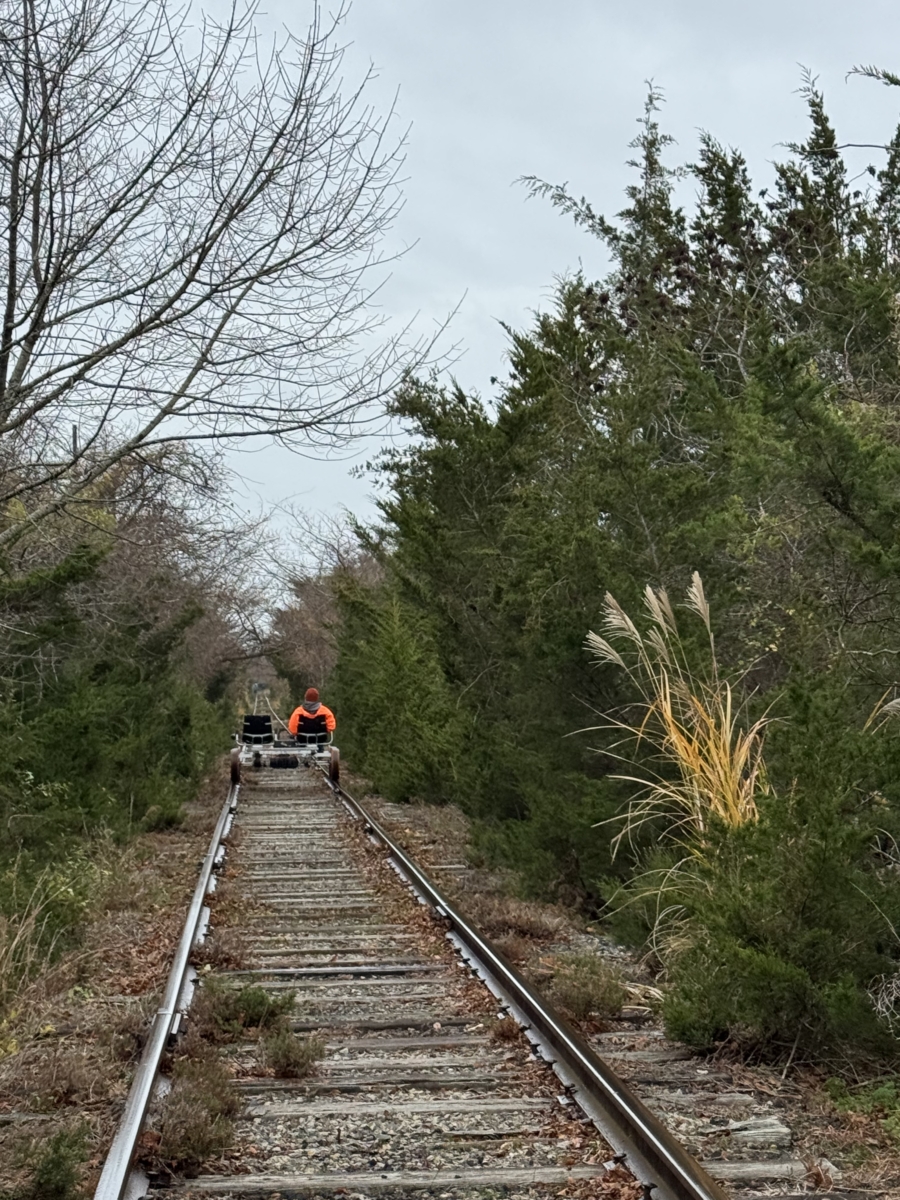
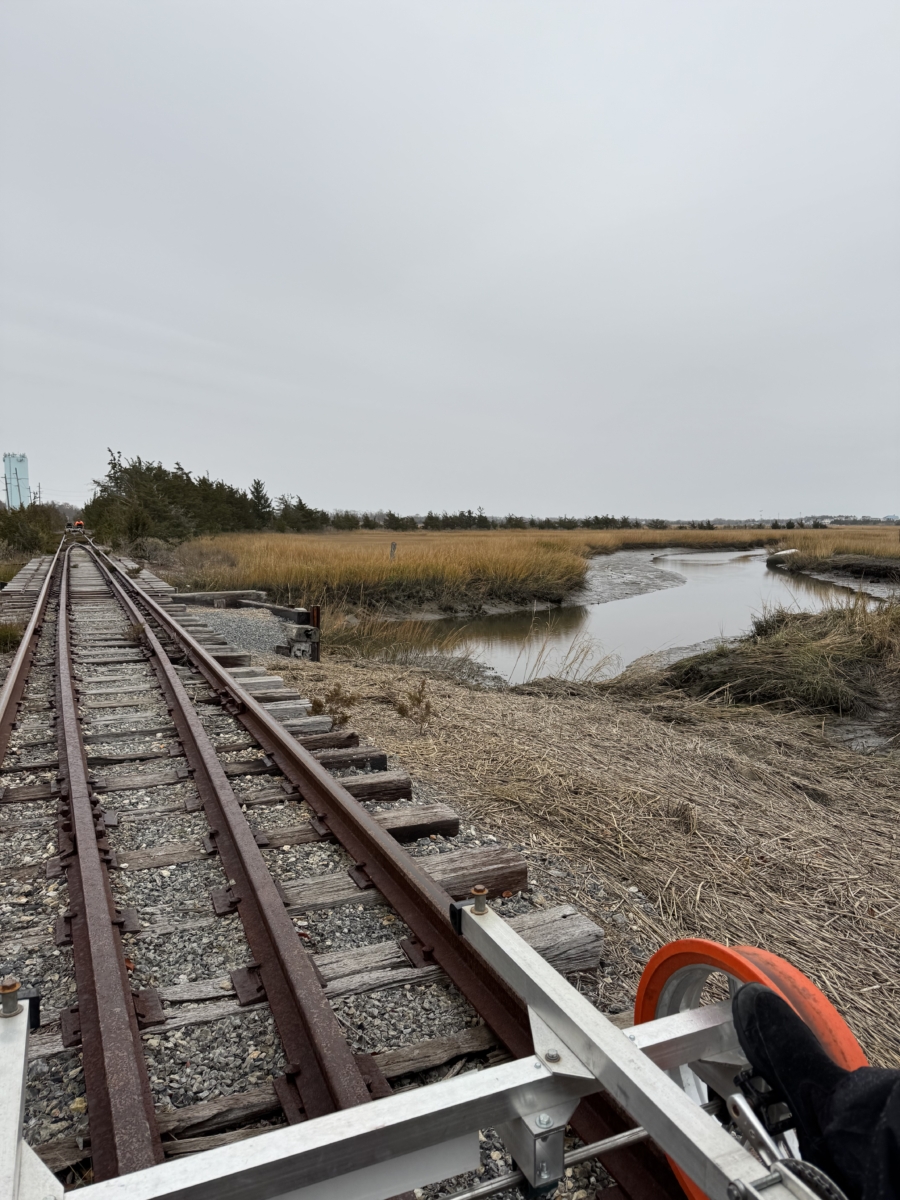
Sections of the rail line are bordered by red cedars. Views of the Cape Island Creek wetlands predominate the eastern side of the tracks.
The Nature Conservancy has rightfully chosen to highlight the monarch’s natural history in its management of the area. The fields are planted in milkweed, the butterflies’ favorite food plant. An interpretative sign is devoted to each of the butterflies’ stages of development. Muralist/ nature artist Alex LeBron was commissioned jointly by the Revolution Rail Company and the Nature Conservancy to paint rail cars that remain parked on the track adjacent to the Preserve’s entrance. These are decorated with wonderful depictions of the monarch in various stages of its colorful glory. A butterfly sculpture is also next to the parking area, sending a clear message that the preserve is designed for these vibrant, splendid, dainty but hardy flyers.
The preserve also offers a centrally located half-mile-loop Braille trail, equipped with a rope to guide the visually impaired. This is the first nature trail I’ve ever seen with this provision. The rope has stoppers alerting the traveler to an up-coming interpretative Braille sign. Sighted visitors can obtain translations on their mobile devices. Rail cyclists can return to the preserve by car and hike the trail at their leisure.
This adventure took us a total of 90 minutes—30 minutes out and back with a midway 30-minute visit at the preserve. The Revolution Rail Company season begins on the weekend of St. Patrick’s Day and ends mid-December. We were two of some 20,000 people who used the rail bikes this year.
I’m looking forward to visiting the preserve at various times of the year. Taking a new mode of transportation proved fun and interesting!
THE COMPANY
Rob Harte is the founder of Revolution Rail Company (2017) and he and his partners, Kim and Ed Lascala, have four locations. The Cape May site opened in 2020. The Company offers experiences in New York (four locations), Maine, and Colorado. Tours at any of the sites can be booked on the website Revrail.com.
Some fun railway facts:
The line we traveled was the former Reading Railroad line laid in 1863. It was constructed with a focus on tourism, and was so successful that the Pennsylvania Railroad constructed a competing railway just 50 feet to the west. Today it is a footpath.
Jake Cuomo, general manager, told us that Cape May and Atlantic City competed for tourist dollars—at their peak the rail lines carried 1,500 passengers per day into Cape May.
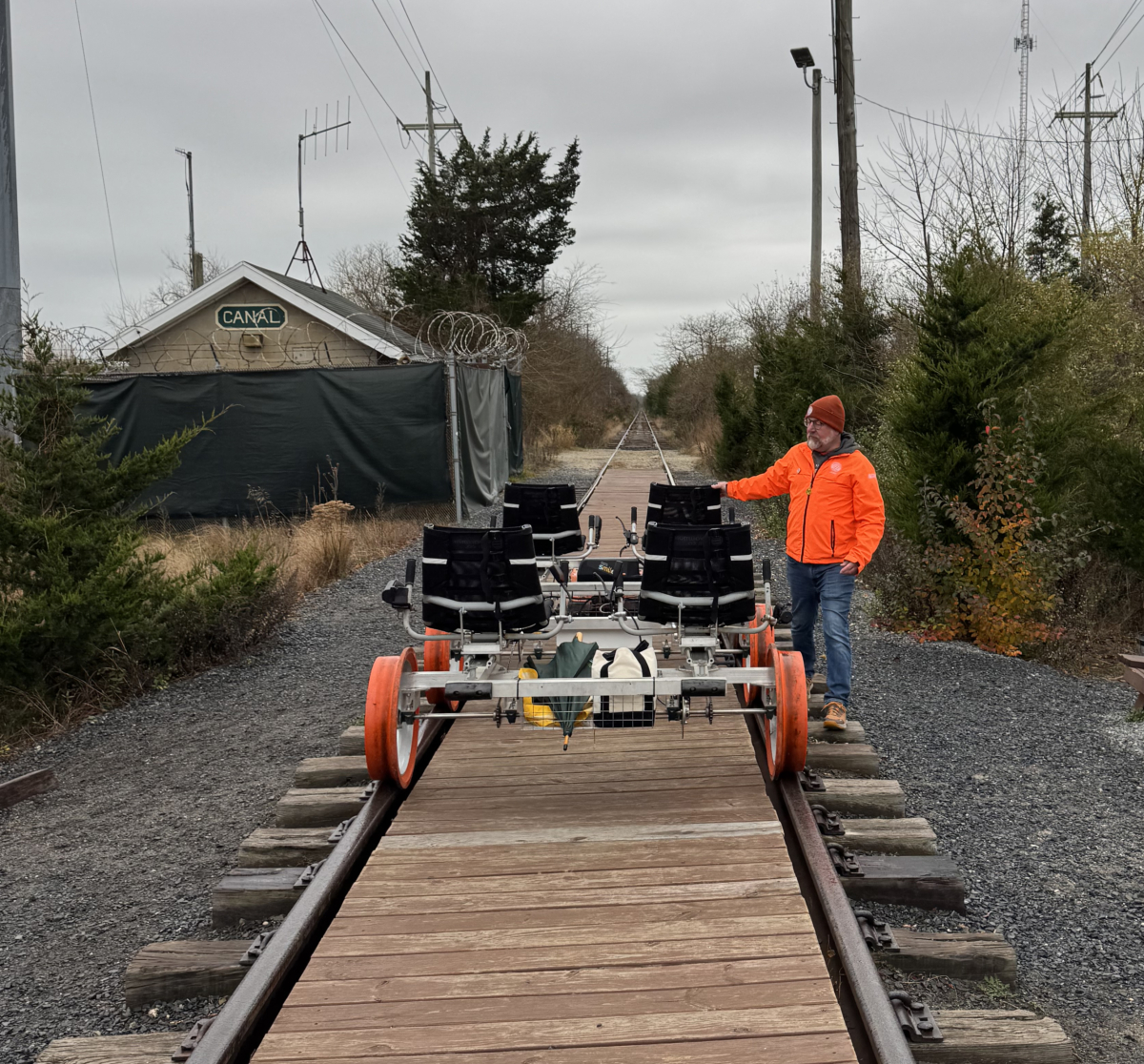
Jake Cuomo, of Revolution Rail Company, prepares rail bikes heading south to Cape May.
The Reading and Pennsylvania trains would actually race on their parallel tracks so their passengers could get the best beach spots. Upon exiting the train they were given shoe box lunches that ultimately caused locals to coin the word “shoobies” for day trippers.
Cuomo says, “To this day these locals are still labeled ‘shoobies’ unless they ride the Revolution Rail, because the mayor signed an agreement with the Company that prohibits their passengers from being bullied.” Hmmm.
In 1933, the two competing train services merged to become the Pennsylvania-Reading Seashore Line.