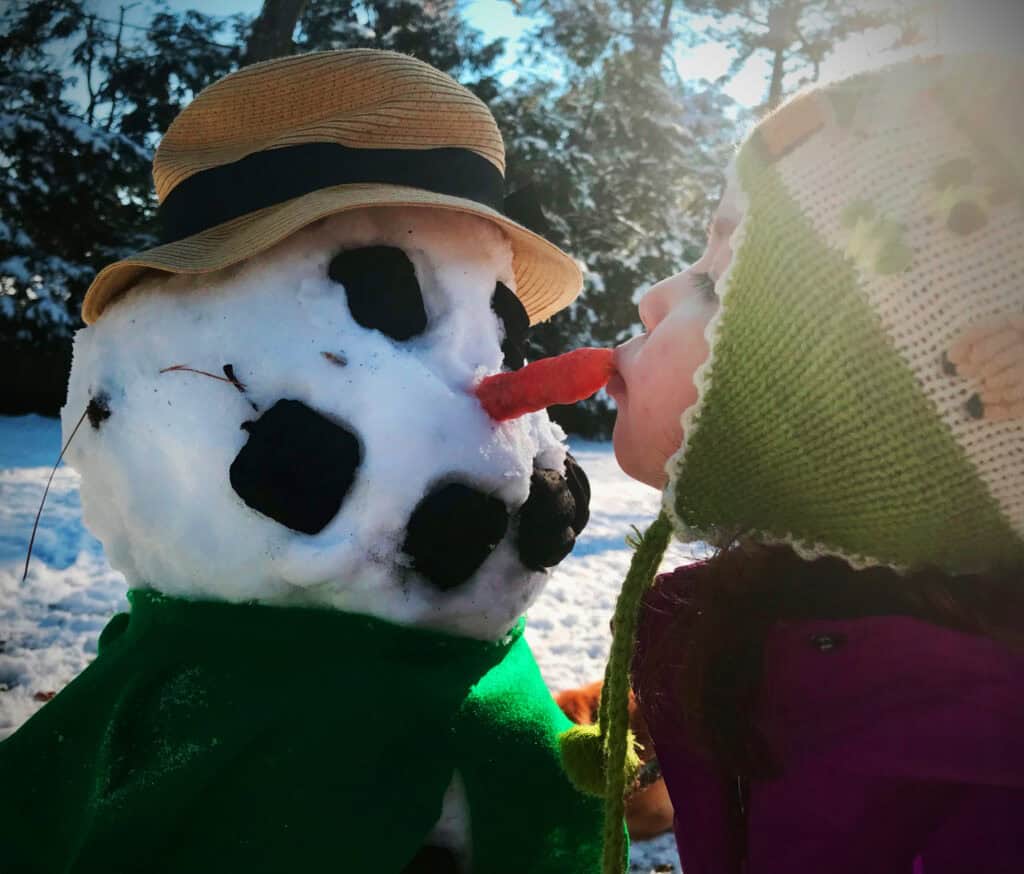
The smell of snow? One of the largest and most complex nerves in our skull is the trigeminal. It interprets both sensory and motor information, including our sense of smell. It responds to tingling sensations like mint, spices, or the bite of winter air. The trigeminal nerve relays a “subtle yet visceral reaction that makes the aroma of a snowy day feel alive, vibrant and unmistakably winter.” —Melissa Szaro (Ski.com). Photo: K. Rossini
Our senses become more attuned in the cold, refreshing air of the season. Embrace it!
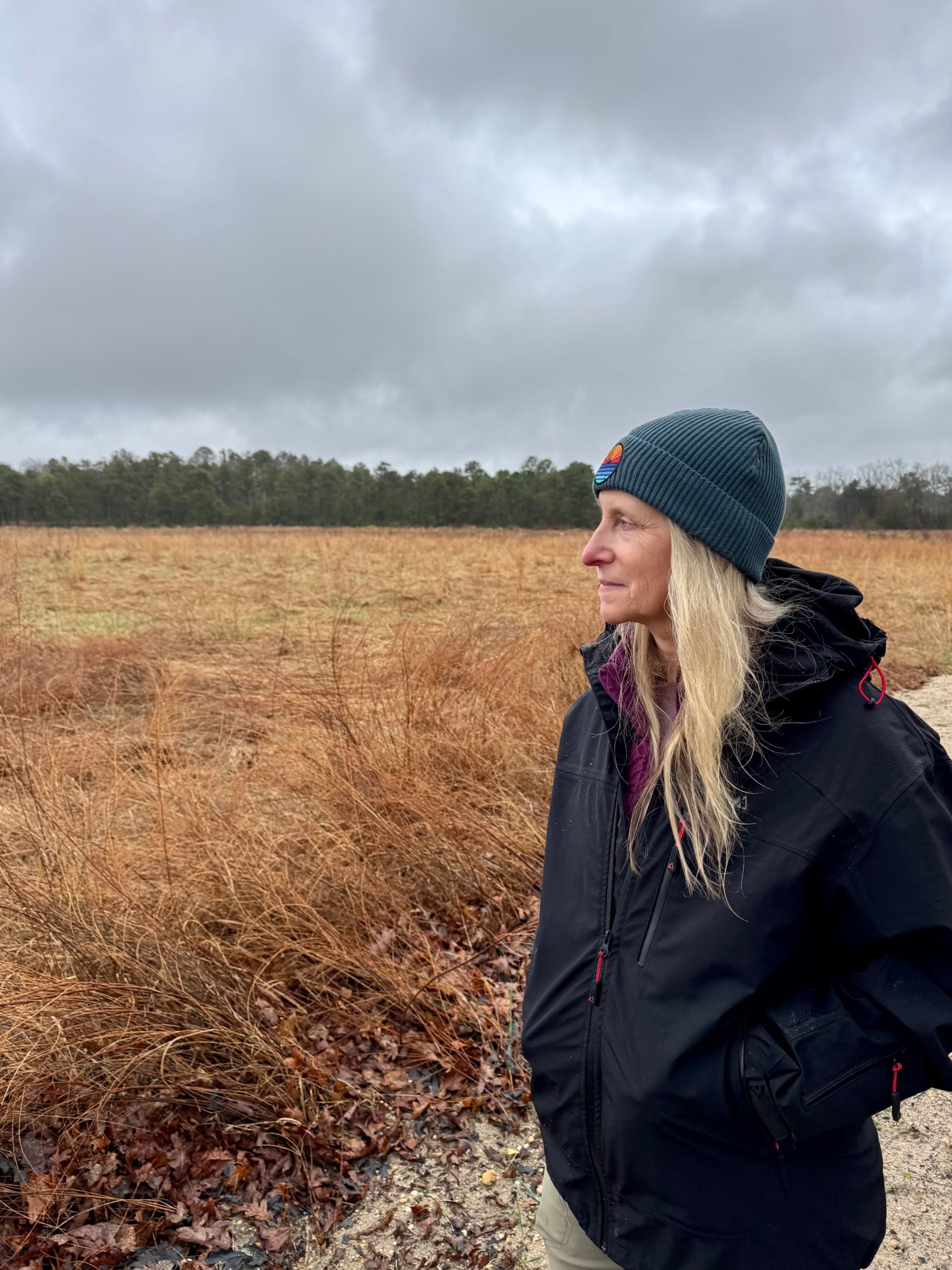
On milder winter days I enjoy taking a walk in the forest. It is often quieter underfoot there because of moist ground, allowing one to hear even the faintest drilling sounds of a foraging downy woodpecker. On drier days, the crunch of dead leaves under my feet can drown out the sounds of nearby wildlife, so I often find myself stopping to listen.
In the quiet moments, the woods inspire reflection and I become lost in thought. I look at the barren branches of a winter tree thinking that even when bare, the poet’s words ring true, “I think that I shall never see a poem lovely as a tree.” (Joyce Kilmer) The cry of a red-bellied woodpecker, the honk of a goose, a scolding chickadee, a nasal yank-yank of a red-breasted nuthatch, or the scrabbling scamper of a squirrel interrupts my contemplations. At times nature simply demands my attention.
A bit of snow or rain enables me to more easily identify tracks and signs left by the denizens of the forest and to craft stories in my mind about what must have happened there.
A leafless canopy provides newly discovered, unimpeded views. Farther off, rivers and fields can be spied where leaves once created a more short-sighted perspective. Sometimes things that I thought to be much further away are in fact nearby.
Recently, I was walking in a field in Salem County bordered by a deciduous forest along Salem River. The leafless trees on the opposite hillside revealed that I was just a short distance from southern New Jersey’s famous Cowtown Rodeo. I’d not realized its proximity through a thick canopy, but it was made ever so obvious in the bare winter woods. I saw a herd of deer navigate the meander on the narrows of the river’s bed beneath me and then run up the hillside pasture behind the rodeo. There, cows looked at them without a care as they peacefully shared the same pasture.
Sighting birds and animals among the leafless trees is also much easier in winter. The early spring forest offers these same advantages. In the last few weeks, I have seen a number of racoons simply because bare branches revealed their presence.
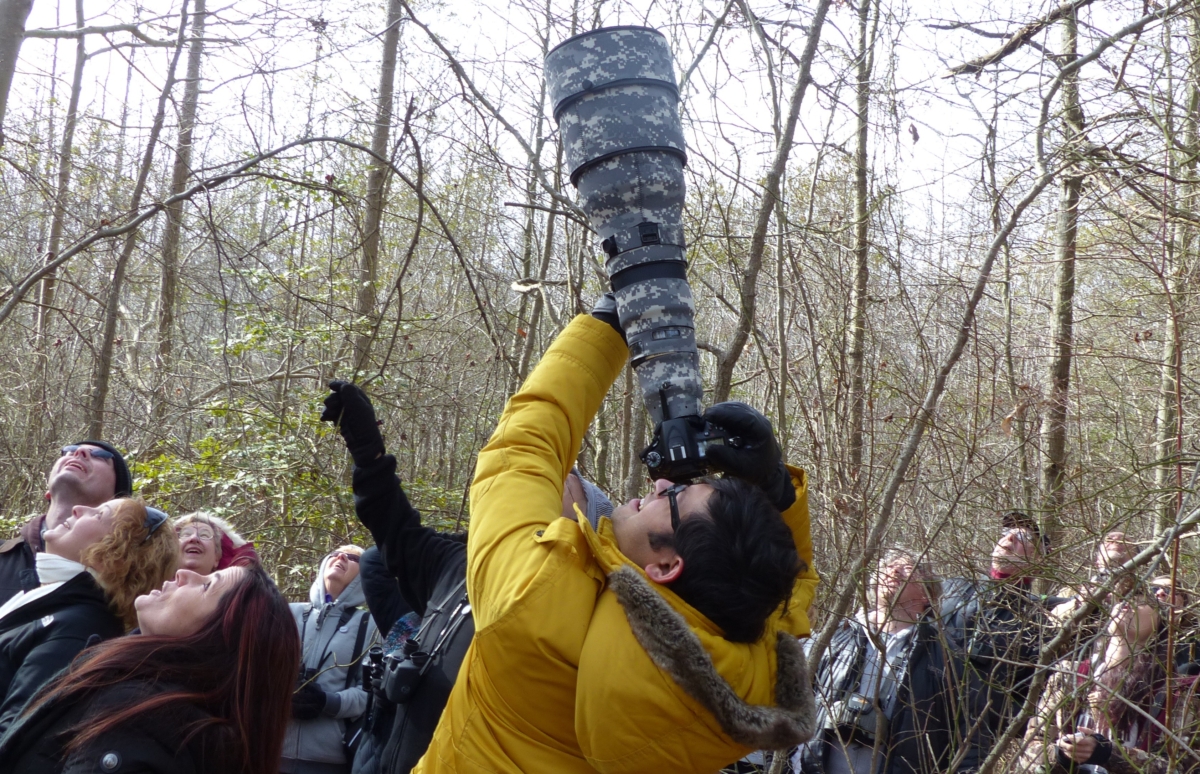
Wildlife watchers enjoy leafless trees that offer great sightings of birds and other arboreal animals. Cumberland County Eagle Festival. CU/Natural Lands file photo
Another benefit of the winter woodland is that nasty ticks are not nearly as prevalent. Others of our famously dreaded bothersome comrades, like greenhead flies and mosquitos, are nonexistent. In our region this is a huge plus for cold-weather hikers.
Winter is also the time of water recharge. The rain that we get during cooler months has less evapotranspiration than in hotter months, so that more precipitation is able to provide groundwater recharge to both our aquifer and surface waters. Average rainfall in New Jersey is 3.8 inches per month. From 1895-2025, the average rainfall for January through March was 3.76 inches. If you are curious about April showers, that average is 3.74 inches (source climate.rutgers,edu), so that the higher moisture levels are primarily due to less evaporation versus more rain.
I often feel that chilly days smell fresher. Science actually explains what odors we perceive. Scents move through the air on molecules that come from plants and the ground. However, plants release fewer aromatic oils in winter, thus making familiar aromas less present, and when it’s cold molecules simply move more slowly and evaporate less. Additionally, the blood vessels in your nose constrict in response to cold air and your respiratory passages lose moisture. This diminishes your sense of smell as well. Furthermore, reduced humidity in winter means there are fewer air particles. None of this seems as poetic as saying, “The air had a fresh clean cold odor—like new-fallen snow.” At any rate I prefer to think that I have the superpower to smell an approaching snowfall, versus my simply experiencing the lack of scent; sometimes scientific knowledge ruins the magic!
Winter precipitation is important for the spring growth of trees. Remember that water, plants, and sunlight are the basis for all life. Through the process of photosynthesis plants will trap the sun’s energy in their leaves, thereby changing water and carbon dioxide into sugar, and thus allowing animals to access the energy necessary for all life on earth. Trees and plants will also return water to the atmosphere via their leaves. And the evaporation of surface waters contribute to the water cycle.
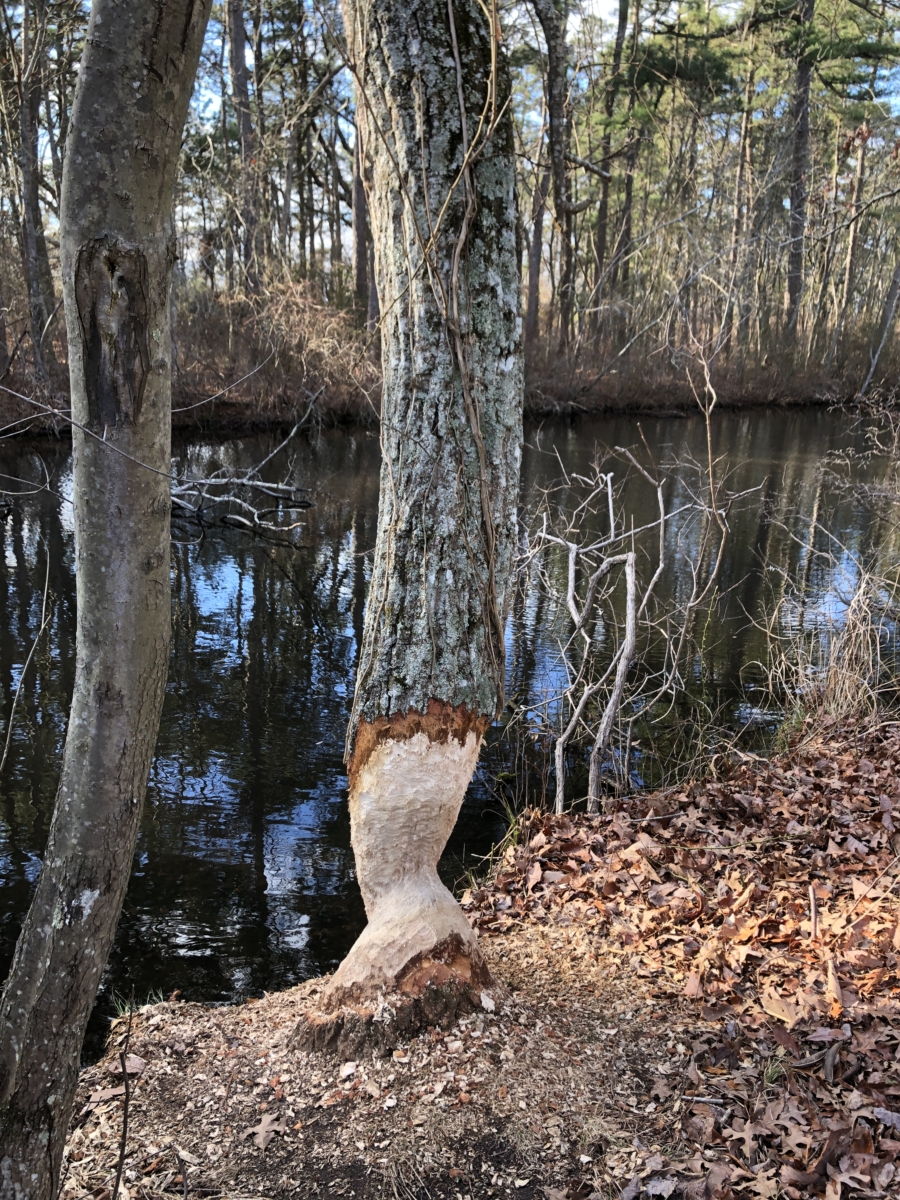
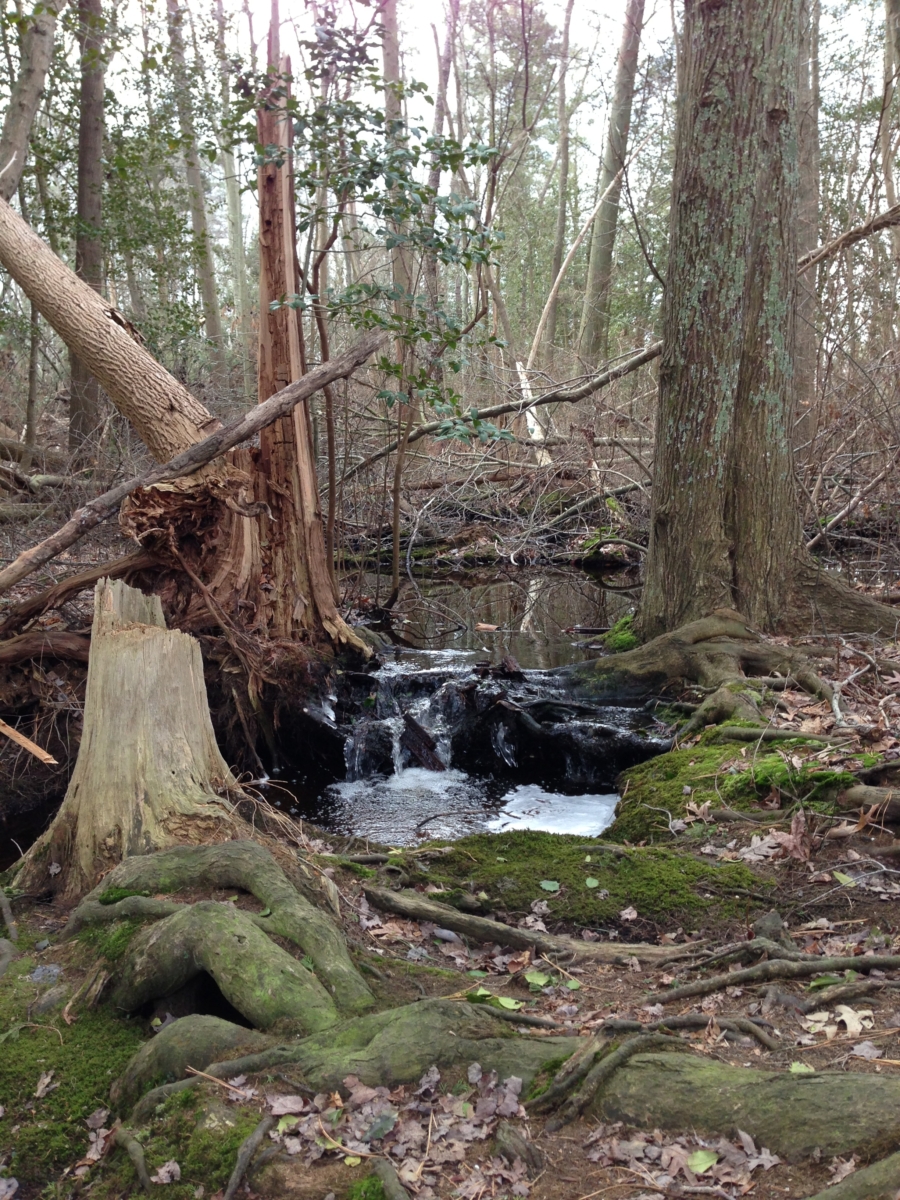
Signs of animals can be seen from greater distances in a winter woods, due to more open canopy and understory. Beaver activity at Union Lake Canal. RIGHT: In the stillness of a winter woods, a babbling brook like this one at the Natural Lands’ Peek Preserve can be heard from greater distances. Photos: J. Morton Galetto
In winter, trees slow their growth to conserve energy. Deciduous types have dropped their leaves to reduce water loss while evergreens continue photosynthesis but at a much slower rate. The decrease in sap flow helps trees survive cold, frost, and wind.
The windiest part of the year in New Jersey is October 6 to April 4, when winds average 15 miles per hour (2018-Present weather spark.com). More importantly, the highest of winds take place during this time, with mean hourly peaks in the 25-28 mph range. The absence of leaves helps to give limbs a reprieve from being torn off by winter gusts.
Beneath our feet, microorganisms like fungi and insects remain active, especially if snow offers an insulating blanket. Decaying leaves, branches, forest mast, and other organic matter are all breaking down to create soil, such that important nutrients are being replenished.
In autumn I found that most of our vernal pools had dried up. These are the depressions where soils are less permeable and that fill up with water, often due to a layer of clay. During winter and early spring they will normally be recharged, providing important habitat for reptiles and amphibians, and offering drinking holes for mammals and birds. I hope to find that recent rains have been replenishing these pools.
In a winter forest, who stays and who leaves depends on the creature’s adaptability and its needs. Birds are the most adaptive. There are year-round birds in our forest, birds that migrate to warmer climes, and those that come from colder areas to winter here. Some animals will hibernate or slow down their metabolism. As with us, it’s a matter of seasonal preparation and adaptation. Other creatures are simply designed for seasonal variability, like mink and otter.
Enjoying winter wandering is truly a matter of preparation, plus avoiding the worst of days to enjoy the great outdoors. So watch the weather and layer up for a nice winter walk.
Sources
Climate Rutgers.edu, NJ Precipitation Stats. https://climate.rutgers.edu/stateclim_v1/nclimdiv/
Ski.com To the Mountains, The Chemistry of Cold: What Does Snow Smell Like? https://www.ski.com/blog/ever-wonder-why-snow-smells-so-good