Arctic Blast Triggers March 1–4 Snow and Ice Threat Across Midwest and Northeast
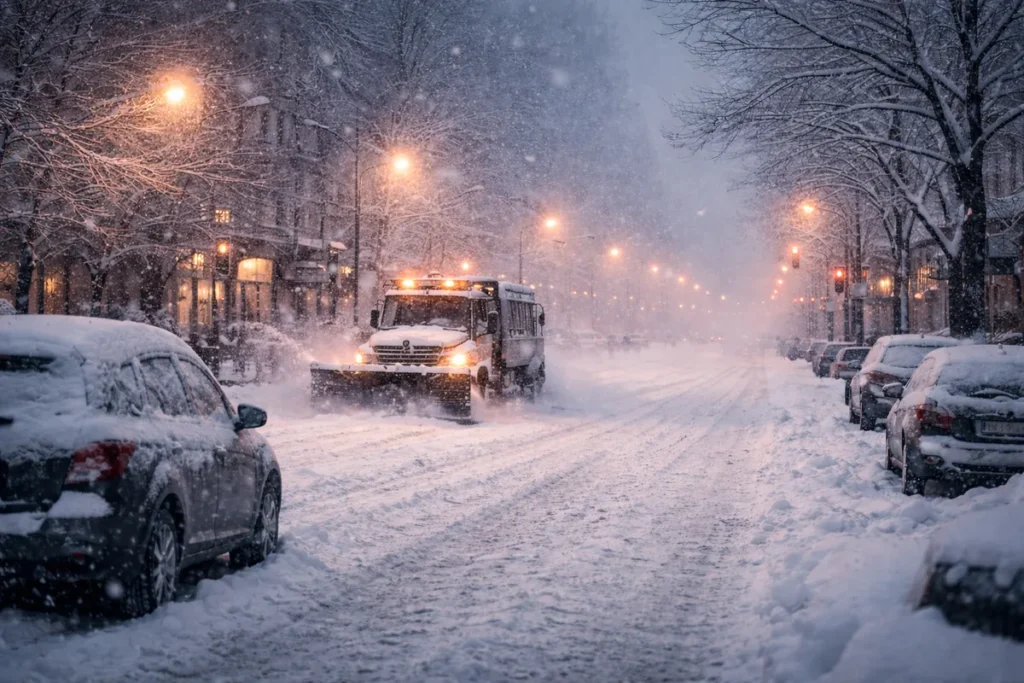
Forecasters are tracking a winter storm that could bring snow, sleet, and freezing rain from Sunday, March 1, through Tuesday, March 3, as fresh Arctic air moves south and meets warm, moisture-laden air advancing from the South.
AccuWeather says the colder air will surge over the weekend. Temperatures are projected to fall 15 to 30 degrees below the highs recorded Saturday, Feb. 28. In New York City, readings near 50 degrees Saturday afternoon are forecast to drop into the 20s by Monday. The brief warm spell may lead to snowmelt and runoff, which could refreeze Sunday night and create icy surfaces.
Before the early-week system arrives, lighter rounds of wintry weather are expected. A quick clipper delivered snow to the Northeast on Wednesday. Another weak storm followed Wednesday night, laying down a narrow band of snow that later changed to rain from South Dakota into parts of the Ohio Valley. As that system dipped farther south Thursday, it lost access to cold air and produced rain along the Atlantic Seaboard, supplying needed precipitation to the Southeast through Thursday night.
A separate band of snow is forecast to form Friday, Feb. 27, into Saturday night, Feb. 28, ahead of the Arctic air plunging southeast from Canada. Snow will begin in Montana on Friday and expand into the Midwest Friday night and into Saturday. Most areas in this corridor are expected to receive 1 to 3 inches, while a tighter stripe of 3 to 6 inches is possible in North Dakota and South Dakota. Chicago, Minneapolis, and Detroit may collect around an inch from Friday night to Saturday night. Snow should reach the interior Northeast Saturday night and extend to the coast by Sunday morning.
Temperatures south and east of the Arctic front will climb Saturday briefly across the Ohio Valley, mid-Atlantic, and New England before dropping Sunday into Monday. In New York City, forecasts call for highs near 50 degrees Saturday afternoon, falling into the 30s Sunday, and struggling to exceed the 20s Monday. The temporary warmth could melt existing snow, with slush and runoff pooling on streets and creating hazards for pedestrians. A rapid freeze Sunday night may turn standing water into ice.
Meteorologists say fresh cold air is essential for winter storms, and the upcoming system will have that ingredient in place. As warm, moist air collides with the Arctic air mass, widespread snow, sleet, and freezing rain may spread across parts of the Great Lakes and Northeast. If temperatures remain sufficiently low, much of the precipitation could fall in frozen form.
The zone most likely to receive a few inches of snow from Sunday to early Monday currently stretches from northern Missouri to central Indiana and central Ohio. Attention then turns east toward the central Appalachians and possibly portions of the mid-Atlantic coast later Monday. Areas from Pittsburgh to Boston, including New York City, could experience effects depending on the storm’s path and strength.
AccuWeather meteorologist Alex Sosnowski said, “Fresh Arctic air will set the stage for a storm early next week that could bring disruptive snow and ice to parts of the Midwest and Northeast.”
The National Weather Service said the system is not expected to be a blockbuster storm but that plowable snow and ice appear probable, with snow forecast across portions of the Mid-Mississippi Valley, Ohio Valley, and Mid-Atlantic. Farther south, the setup favors sleet and freezing rain. Snow and ice totals will depend on the storm’s track and intensity. A farther north track could raise the risk of ice jams and related stream and river flooding. Locations that received little or no snow from the Blizzard of 2026 earlier this week could see several inches of snow and/or ice with this event.
The approaching system is highly unlikely to rival the Blizzard of 2026, which intensified early Monday and struck much of the Northeast with heavy snow, grounding flights, closing schools, and cutting power to hundreds of thousands of homes and businesses.
Travel concerns are expected to increase from Monday, March 2, through Wednesday, March 4. Airport hubs in Washington, D.C., Philadelphia, New York City, Boston, Detroit, and Chicago could experience delays and cancellations. Road conditions may deteriorate quickly from Monday into Tuesday. In areas where precipitation falls as rain, especially parts of the Ohio Valley and along the mid-Atlantic and southern New England coasts, urban flooding is possible.
In New Jersey, residents began Saturday morning with pockets of dense fog caused by moisture from the remaining snowpack from last week’s big snowstorm, with moisture drifting in from the Atlantic Ocean. With many locations observing below freezing temperatures, freezing fog was possible. The fog is expected to dissipate in most areas by about 9 a.m.
Sunshine is forecast to follow, pushing temperatures into the low 50s in northern New Jersey and the mid-50s in South Jersey on Saturday, Feb. 28. Overnight lows are expected to fall into the low 30s as a storm system crosses the state, bringing light snow to the northern half and light rain elsewhere. A light coating of snow is forecast in northern New Jersey late Saturday night into early Sunday morning, March 1.
Highs Sunday are projected to remain in the upper 30s to low 40s, with a surge of Arctic air driving temperatures into the mid-teens Sunday night into Monday morning. A winter storm that had posed a threat for Monday is now expected to remain far south of New Jersey, leaving a mostly sunny but very cold day.
Forecasters say another system developing Tuesday could bring wintry weather to parts of the state, with snow in certain areas and snow, sleet, and rain in others. After that system exits Tuesday night, another storm is forecast for Wednesday with a chance of rain and highs in the 50s. Temperatures could approach the low 60s by Friday.