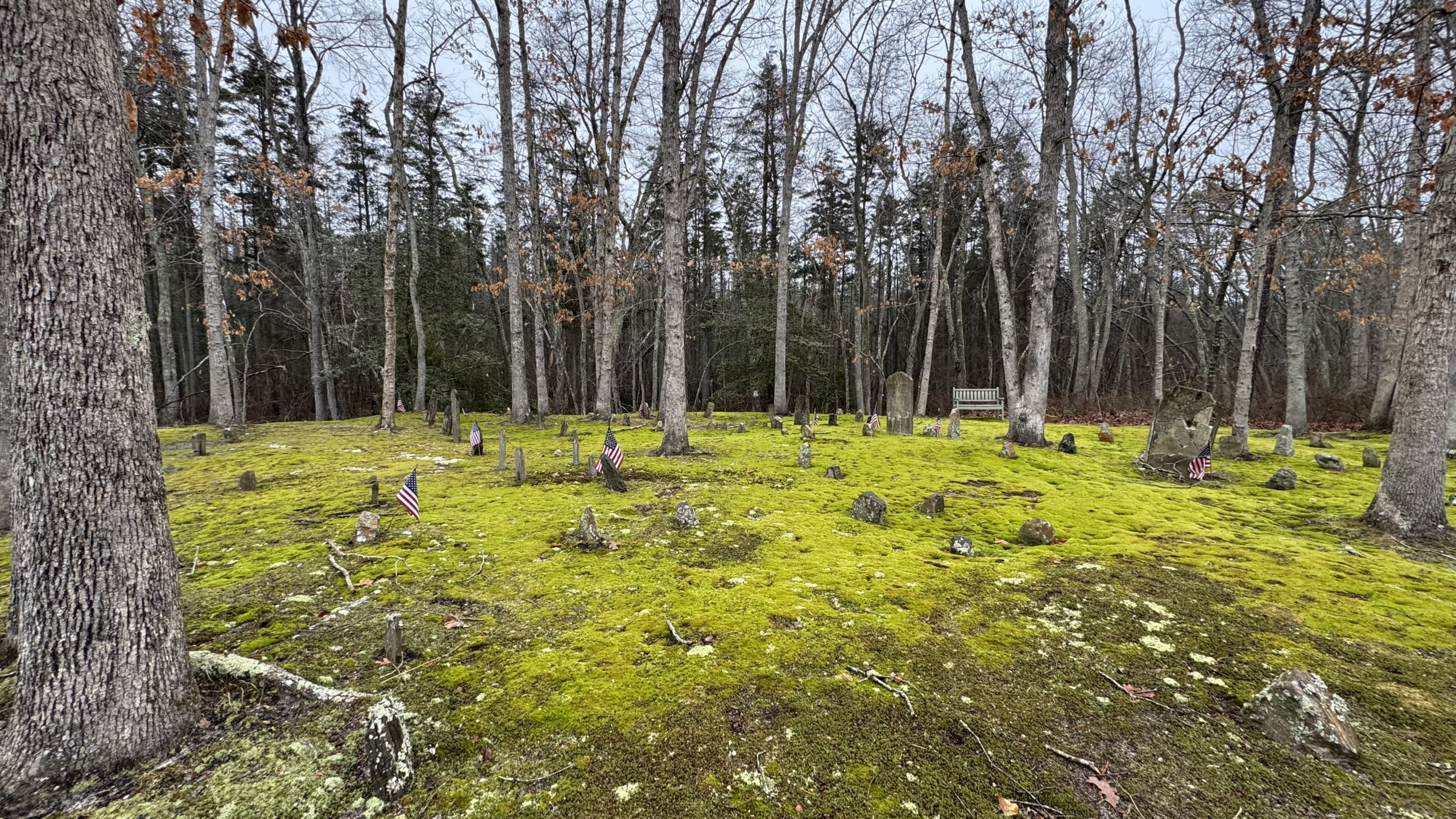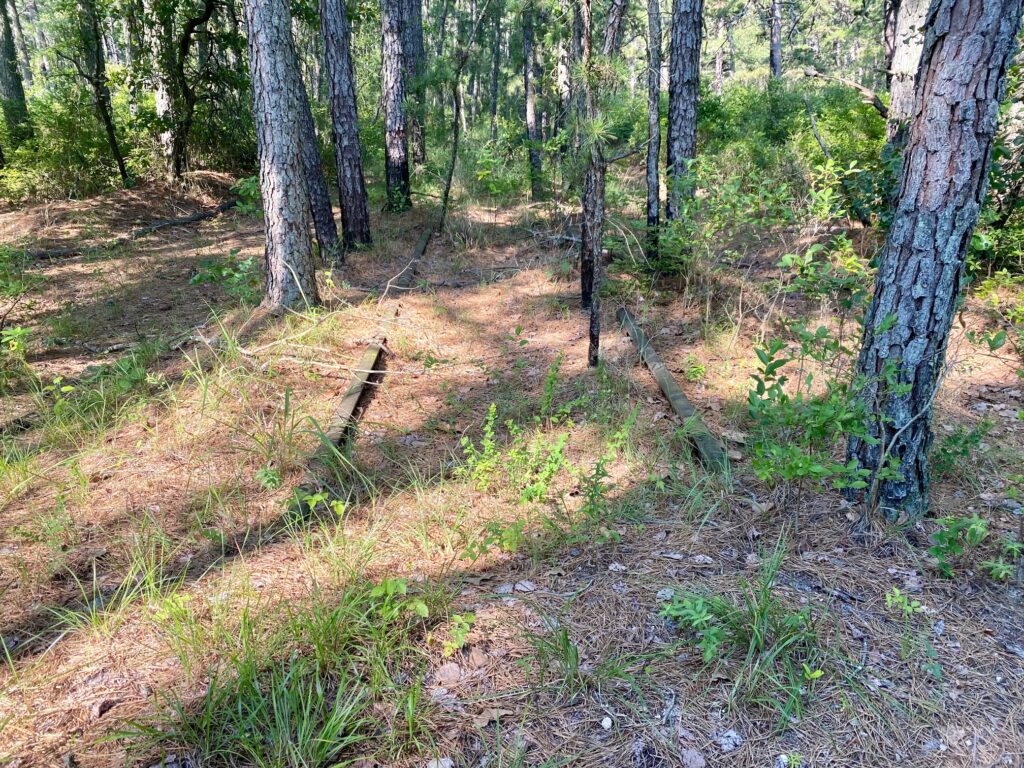
Railroad tracks from the 1870s in an area where Mary Treat collected plant species are still visible—despite the pine forest that has since taken over the site. PHOTOS: DEBORAH EIN
We’re retracing the footsteps of a woman ecologist who helped set the groundwork for Pinelands preservation.
Recent columns under this heading have showcased the Pine Barrens and how that region of the state came to be protected and named a UNESCO (the United Nations Educational, Scientific, and Cultural Organization) biosphere reserve. Author Leslie Ficcaglio’s articles (https://snjtoday.com/precious-pinelands/ and https://snjtoday.com/precious-pinelands-part-2/) also discussed the many advocates—from writer John McPhee to statesmen, farmers, hunters, and environmentalists—who were instrumental in passage of legislation that created the Pinelands National Reserve and Pine Barrens Ecological Boundary.
However, let’s not forget that naturalists from a century earlier were collecting the flora and fauna that would document species and become the basis for protecting this environmentally sensitive region. Two of these were Asa Gray, prominent 19th century botanist, and Mary Treat, a resident of Vineland from 1868 to 1919. Gray was botanizing in the Pine Barrens early in his career along with his mentor John Torrey. He became director of the herbarium at Harvard University, which is when Mary Treat collected plant specimens for Gray and other naturalists, including Charles Darwin. In fact, Treat corresponded with Darwin more than any other woman scientist as they studied carnivorous plants. Darwin put forth his theory of evolution based on the research.
Treat was well-known in her day, especially around Vineland but also in scientific circles nationally and in Europe. Since her death in 1923, her legacy has faded. Though most are familiar with Darwin’s name, few know of Treat and her groundbreaking work. I was among that group, even though I grew up on a farm within the Pinelands and studied forestry at the land-grant environmental college of Rutgers University. It was 2008 before I discovered this amazing woman scientist whose estate files were bequeathed to the Vineland Historical and Antiquarian Society. I was honored to be granted access to those files six years ago in order to research Treat’s life and to bring her story to light.
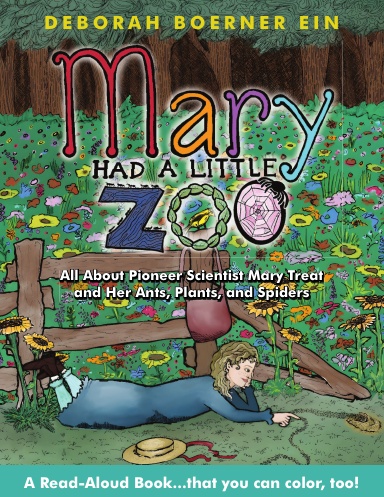
In 2022, some 99 years after Treat’s death, I published Mary Treat: A Biography, followed by a read-aloud coloring book, Mary Had a Little Zoo, to spread the word about Treat and her foresight in working with nature and recognizing its appeal and wide-ranging benefits. As often happens when researching and writing a book, however, there’s always more to uncover. A few months ago, I was able to retrace Mary’s steps to a probable collection site in the Atsion area of the Pine Barrens.
The reconnaissance was made possible by Mark Demitroff, a professor in the geology department at Stockton University, who has studied the area’s periglacial past and through those studies, recognized depressions called spungs, which were cranberry bogs in the 1870s when Treat collected carnivorous plants there.
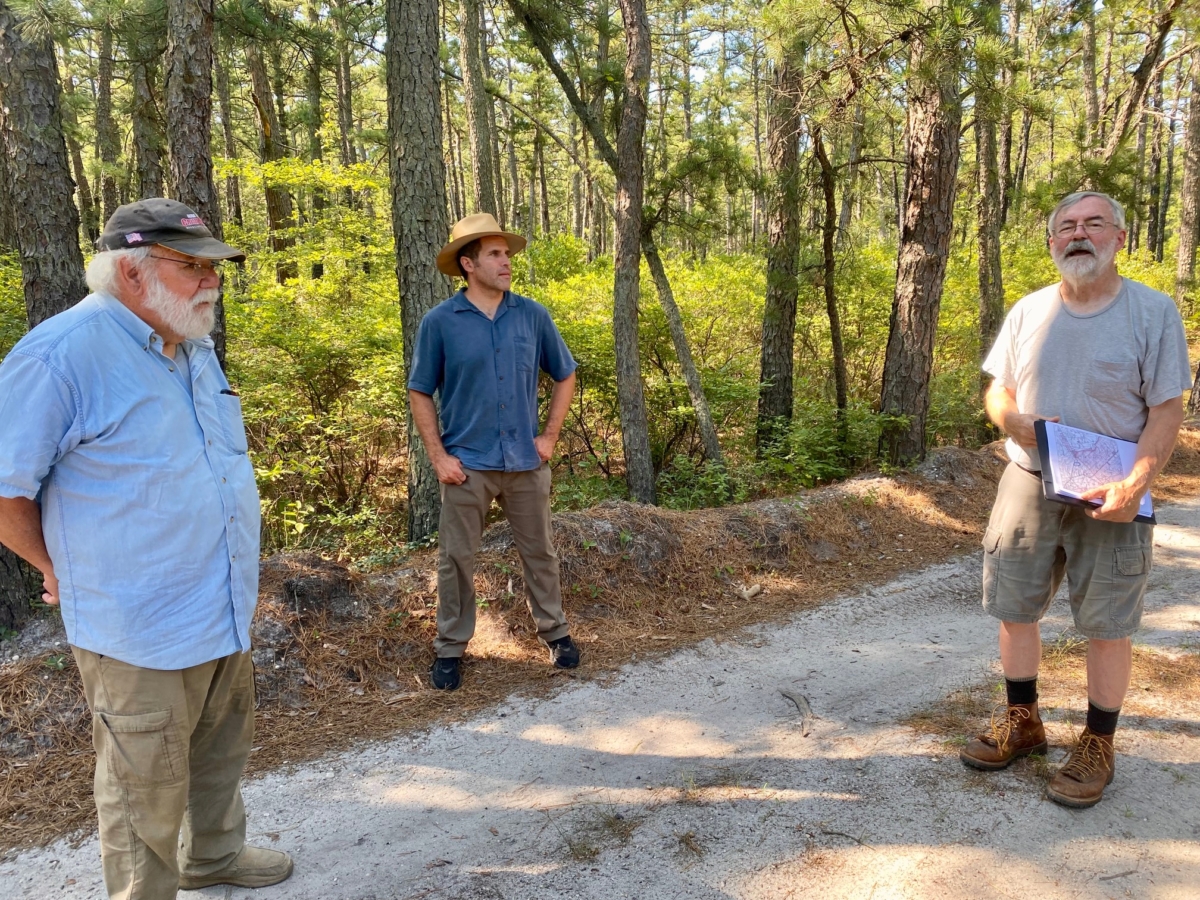
From left: Alan Mounier, Jason Howell, and Mark Demitroff.
Joining our group were archeologist and retired Stockton University professor Alan Mounier, Jason Howell from Pinelands Alliance, and Naomi Ingraldi from the Vineland Historical and Antiquarian Society. It was exciting to locate abandoned railroad tracks as well as the approximate location of the rail station where Mary would have disembarked on her collection forays.
In the same area, Howell located two carnivorous plants in bloom—sundews (Drosera spp.) and bladderworts (Utricularia spp.). Treat’s careful research of bladderworts, possibly at this exact location, led her to correct Charles Darwin on his assumption/comment that the insects worked their way into the plant heads first, using their heads as wedges.
In a December 1874 letter to Darwin, Treat wrote: “I have been studying the bladder-bearing species of Utricularia off and on the last year, and am now fully satisfied that they are the most wonderful carnivorous plants that I have yet seen. The so-called little bladders seem to be receptacles for digesting animal food.”
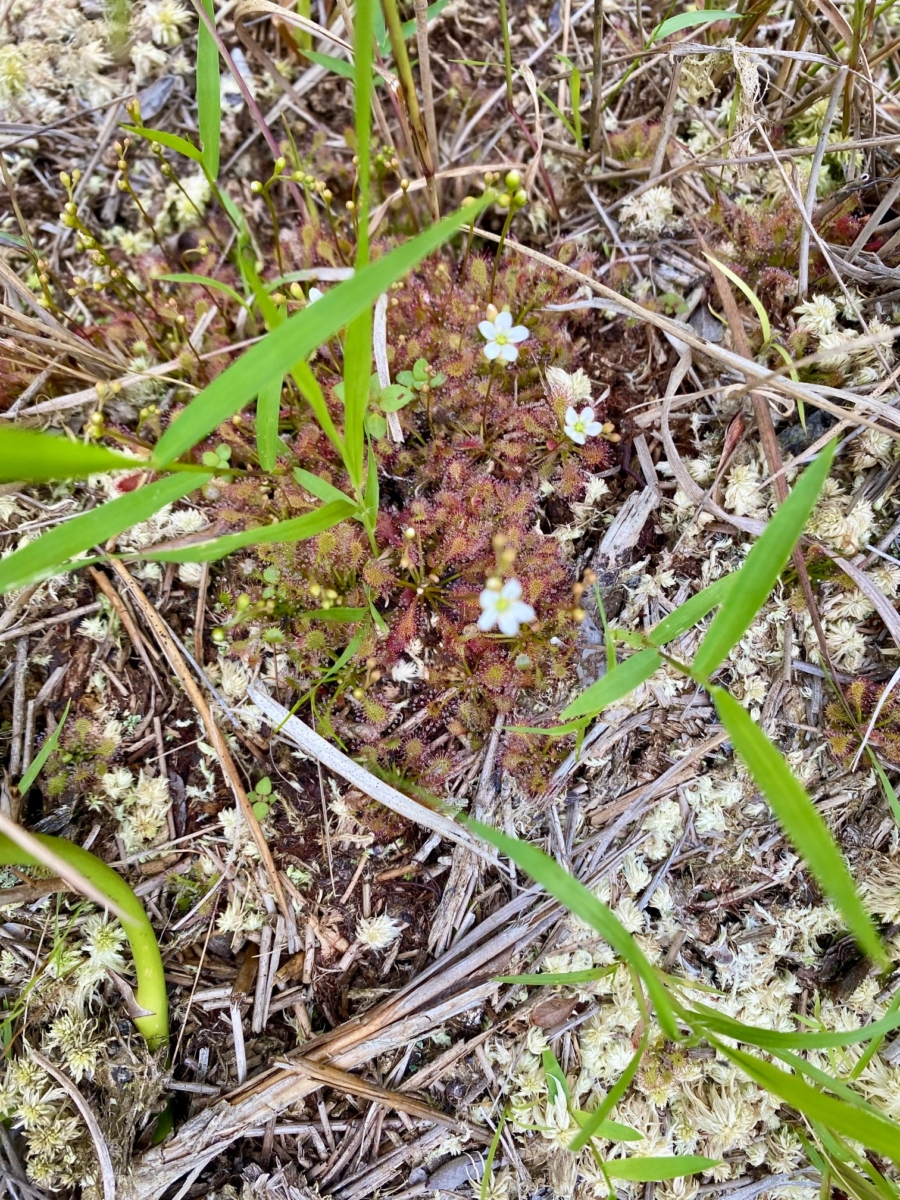
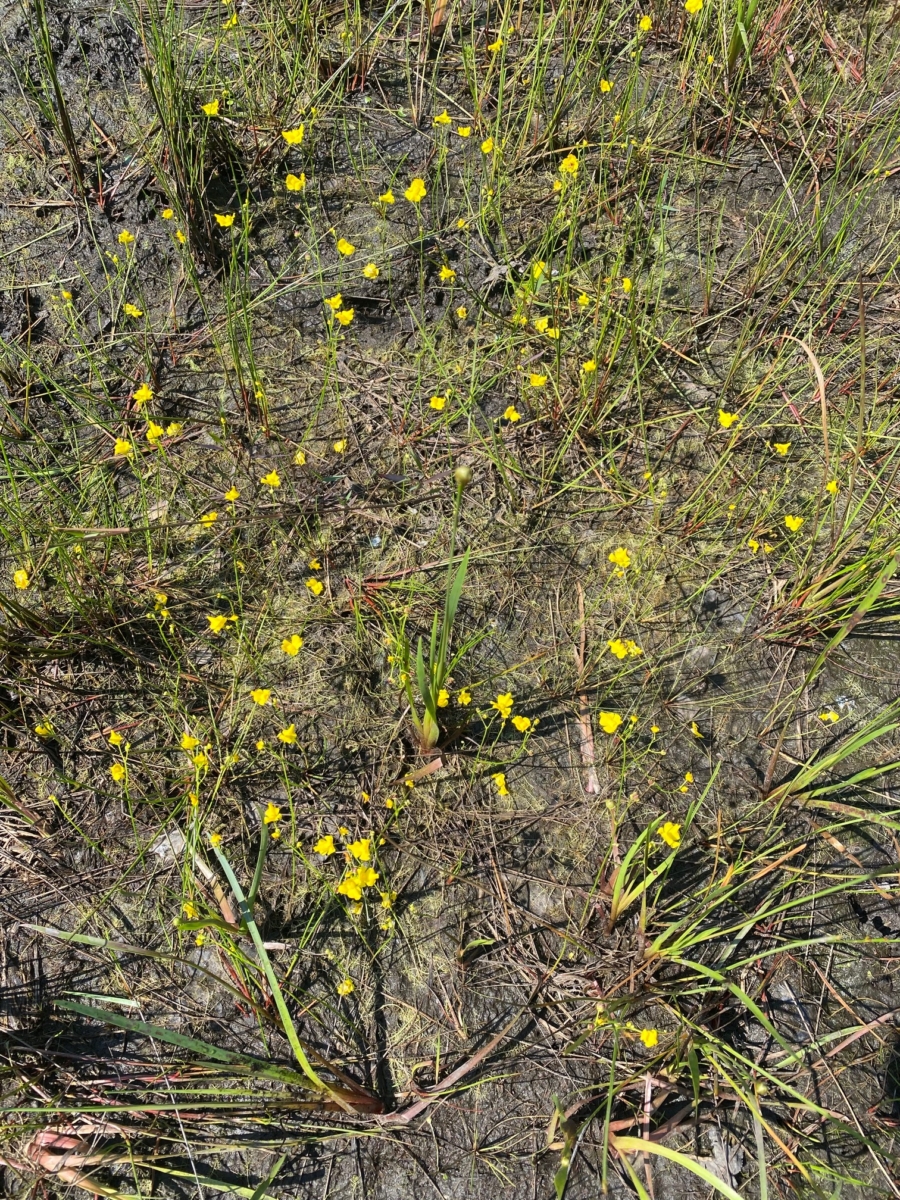
Note leaves of sundew (delicate white flower, left). The bladderwort (yellow flower) receptacles are underground here, but become more obvious when the spung is flooded.
In May 1876, she wrote to him: “…Yes, I received your book on Insectivorous Plants, and thought I had acknowledged its receipt. I was so fascinated with it that I sat up nearly all night before I could lay it down.
“I think I have proven that the valve of Utricularia is sensitive….
“I saw a large number of mosquito larvae caught in the valve with their heads left sticking out….”
Just two weeks later, Darwin wrote to Treat: “I have received your kind letter & the article which I have read with the greatest interest. It certainly appears from your excellent observations that the valve was sensitive…. It is pretty clear I am quite wrong about the head acting like a wedge. The indraught of the living larvæ is astonishing.”
You may read all 15 letters exchanged between Darwin and Treat in my hardcover special edition of Mary Treat: A Biography so you may comprehend the relationship in context. The book also explores Treat’s other areas of interest—bugs, birds, and ecology. She made significant contributions to all these areas of scientific study. She discovered four species of insects, and these discoveries were applauded by her colleagues who named the species in her honor. The same occurred with a plant she discovered in Florida where she spent at least four winters during the 1870s. In fact, her research took her up and down the Atlantic coastal plain from New Hampshire to northern Florida—but it was our Pine Barren habitats and species that she loved most.
In her book Home Studies in Nature, she wrote, “Southern New Jersey has ever had an irresistible fascination to the botanist, unequalled by any other section in the Union.”
Stay tuned for more as Pinelands advocates, myself included, continue to uncover the trail of Mary Treat.
Two Book Signings Weekend of December 6 and 7
Books make great holiday gifts, so check your list, yes, check it twice for those who will treasure the true story of a renowned ecologist of the 19th century who conducted her research right here in the New Jersey Pinelands. Mary Treat: A Biography will be available at each of the events listed below—a paperback version ($25 each, $20 each if buying two or more*) and a hardcover special edition (retails for $46 but discounted at events for just $35*)—with the 15 letters exchanged between Treat and Darwin. Author Deborah Boerner Ein will be on hand to personally inscribe your copies.
*Cash or Venmo accepted at these events.
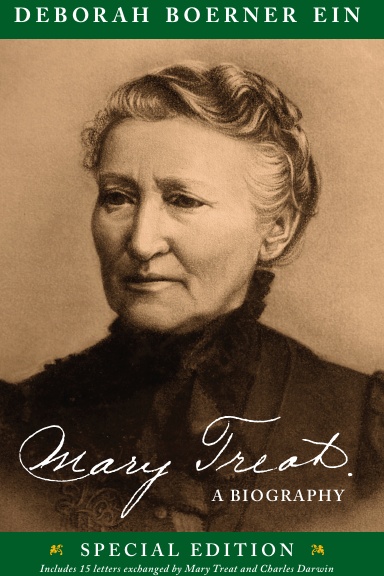
Biographer Deborah Boerner Ein, with a Bachelor of Science degree in Natural Resource Management from Rutgers University, is uniquely qualified to bring Treat’s story to life. She has held editorial positions at New Jersey Outdoors, American Forests, and Lapidary Journal. Currently, she is editor of SNJ Today newspaper in Cumberland County. Since writing the Mary Treat biography, she has authored Mary Had a Little Zoo to inspire kids to observe nature and carry on the adventures of environmental study. Deborah loves to sign the books in crayon (favorite color!) to your children, grandkids, and students. Learn more at marytreat.com
Saturday, December 6
December Open House. Vineland Historical and Antiquarian Society. 108 S. Seventh St., Vineland. 1–4 p.m. Tour the museum exhibits, including the Mary Treat exhibit and memorial gardens. discovervinelandhistory.org
Sunday, December 7
Green Trading Post Holiday Bazaar. Pinelands Alliance (PA) Headquarters,, 17 Pemberton Rd., Southampton, NJ 08088. 12 noon–p.m. Event held December 6 and 7 with author attending Sunday only, but signed books are available at the PA bookstore both days. Features local artists and authors whose work arises from or focuses on the Pine Barrens. Find unique gifts for friends and family this holiday season.
If you can’t make it to either event, all three books are available from the publisher by using this QR code.
Pinelands Alliance (PA) Headquarters,, 17 Pemberton Rd., Southampton, NJ 08088. 12 noon–p.m. Event held December 6 and 7 with author attending Sunday only, but signed books are available at the PA bookstore both days.Features local artists and authors whose work arises from or focuses on the Pine Barrens. Find unique gifts for friends and family this holiday season. pinelandsalliance.org/
Can’t make it to an event? All three books are available from the publisher; just use this QR code!
Links to Amazon listing, other online booksellers provided at marytreat.com