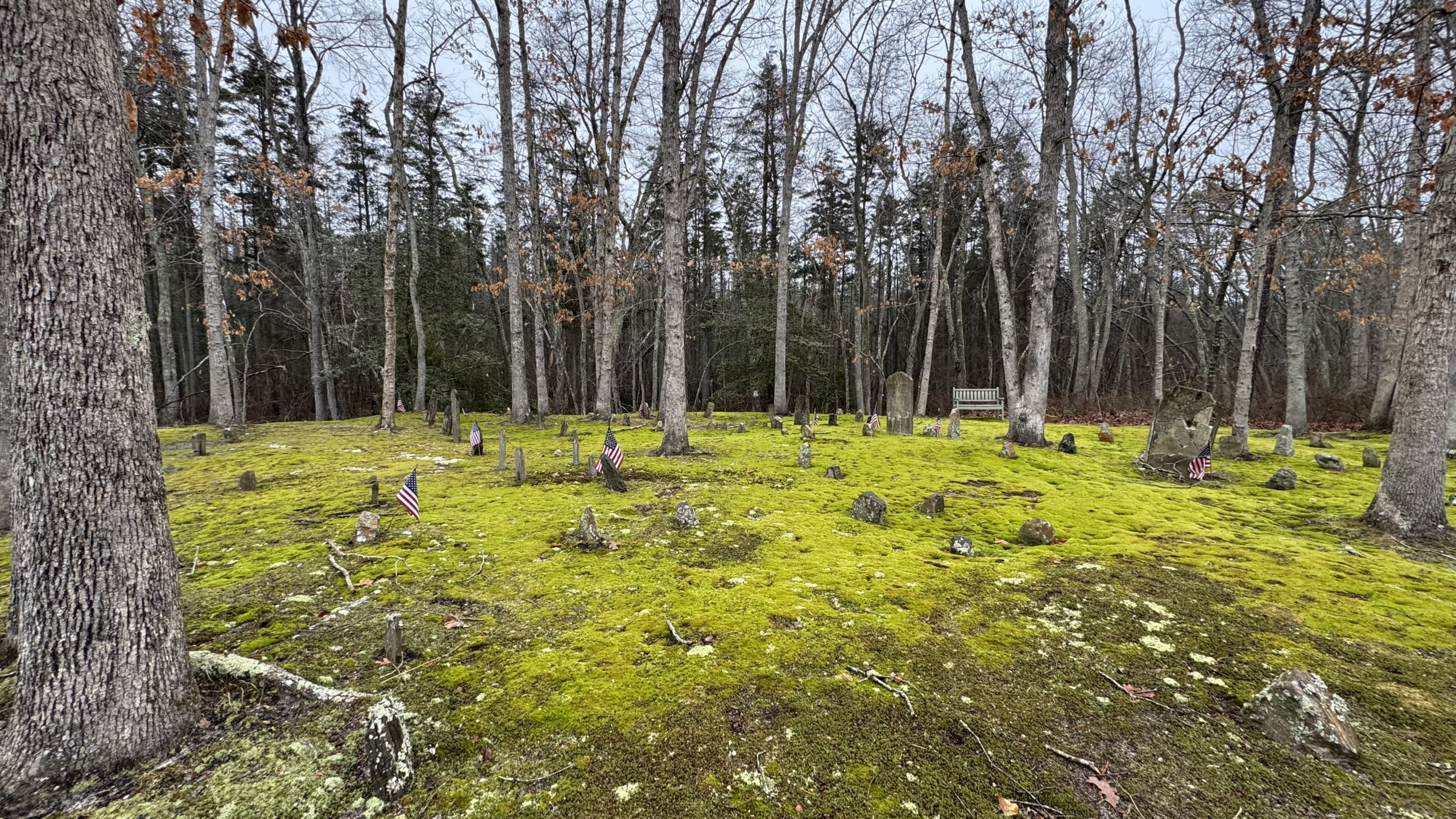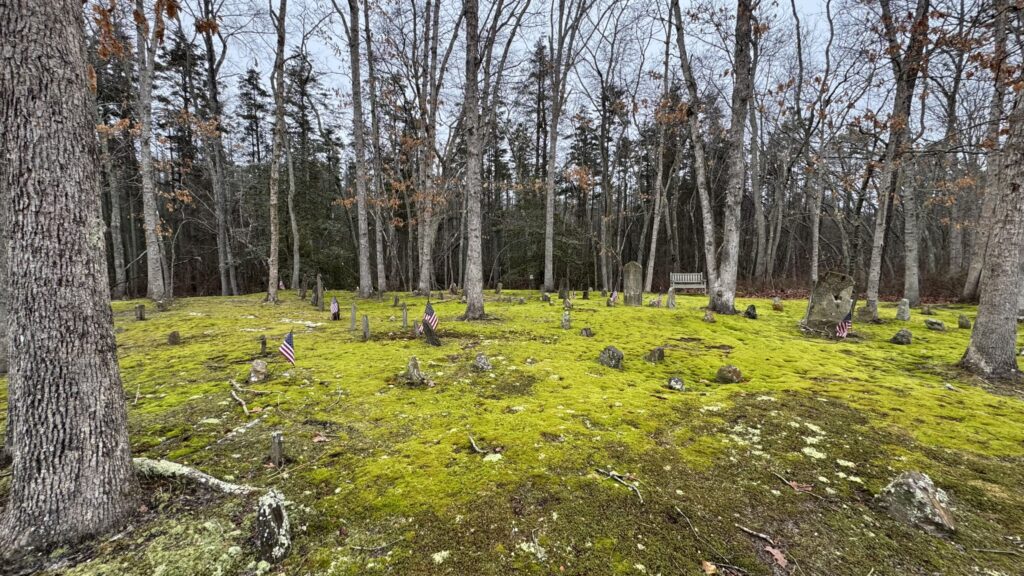
The Steelmantown Cemetery dates to circa 1700 but the Green Burial Ground section is more recent, having begun in 2007. The Green Burial Ground is a wooded site where all graves are hand dug. The paths are carpeted in moss. Photos: J. Morton Galetto
Gaining in popularity, eco-friendly burial options are offered at select cemeteries.
When my sister was faced with making decisions regarding end-of-life arrangements, she became interested in the idea of “green burials.” I was a bit skeptical about a green approach to interment, thinking it more of a hip movement than a reality. But honestly, I’m coming around.
You would think that being labeled an environmentalist I’d be enthusiastic about green burials. But I must admit my oversized ego and historian side would prefer something like the grandeur of Recoleta Cemetery in Buenos Aires; put me right next to Eva PerÓn. Then there’s Bonaventure Cemetery in Savannah, where I would envision my living friends visiting on Friday nights to sip a martini on my gravestone and exchange stories about times we spent together. I have actually never read Midnight in the Garden of Good and Evil, but I know it involves a society lady who famously sips martinis at the grave of poet Conrad Aiken, and I’ve even visited there, sadly without a martini in hand.
The Good Fellows Cemetery in New Orleans seems sort of green to me, in that generations are layered in the same mausoleum where their forebearers’ remains essentially self-dehydrate or cremate in the 400 degree temperatures that occur within the chamber during the New Orleans summertime heat.
I find the Siloam Cemetery in Vineland appealing. There I could keep an eye on Vineland’s founder Charles Landis, to make sure he doesn’t murder any more newspaper editors (Ed. note: Thank you!) By the way, Landis’ legal defense was one of America’s first successful cases to use the plea of “not guilty by reason of insanity.”
If I were interred at Siloam, some of my new neighbors would be folks I used to enjoy when they blessed this side of the turf.
Don’t forget the old Alliance colony’s cemetery in nearby Norma, founded in 1891; this historic burial ground served the first successful Jewish agricultural colony in the U.S. Established by Russian Jewish immigrants in 1882, Norma drew its residents as they immigrated to escape genocidal pogroms.
Here the community built a lasting legacy. The cemetery houses more than 5,000 graves, a Holocaust memorial, and a nearby historical synagogue. I especially like the pebbles left on the headstones by visitors, to show the departed souls that living people still remember them.
I find the Cumberland United Methodist Cemetery next to Cumberland Pond very interesting. The pond powered Bud’s Furnace, which made the colonial-era iron tombstones, which can be found in the cemetery. Furthermore, police chief George Garrison is buried there with his wife and his pet dog in adjacent gravesites; you have to love that.
Everyone should surely visit the Old Stone Church in Fairton as well as the Old Broad Street Presbyterian Church and cemetery on Route 49 in Bridgeton. Old Broad Street is said to be the most historically authentic colonial church in the northeastern United States. Since the congregation moved to a new venue early on, the church maintained its original state rather than undergoing numerous renovations.
Don’t forget the beauty and simplicity of our local Quaker burial sites. None is more exemplary than the one at the confluence of the Manumuskin Creek and Route 47, where Port Elizabeth’s founder/namesake Elizabeth Bodley has a tiny marker engraved simply “EB.”
Needless to say I find cemeteries interesting, especially historic ones.
In my sister’s endeavors to find a green cemetery she identified the one in Steelmantown, located on the edge of Woodbine and adjacent to a portion of Belleplain State Forest.
Steelmantown Cemetery was established in the 1680s and is rooted in Revolutionary War–era history. Its approach is to use green burial practices while restoring and protecting local ecosystems. Green burials are friendlier to soil health and, in the case of Steelmantown, are relatively harmonious with the neighboring state forest environment.
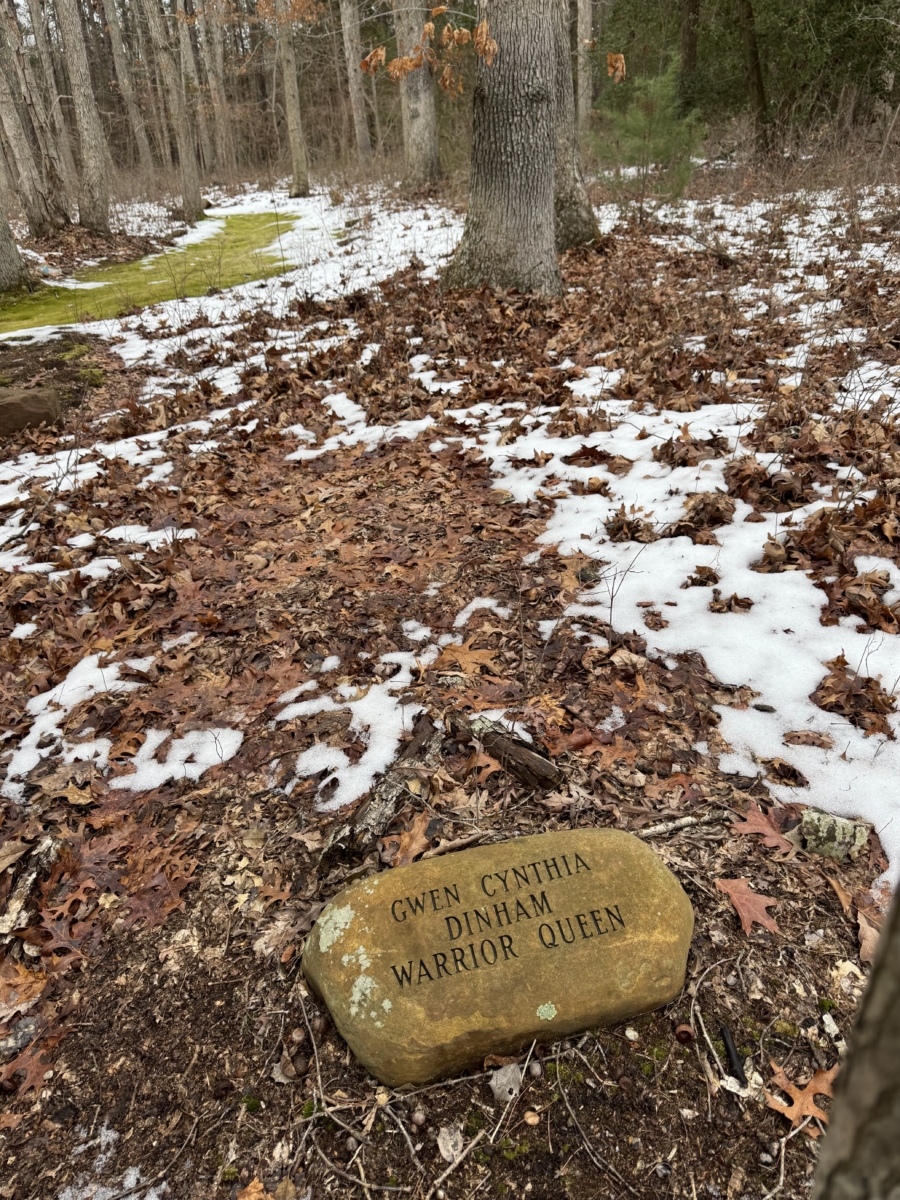
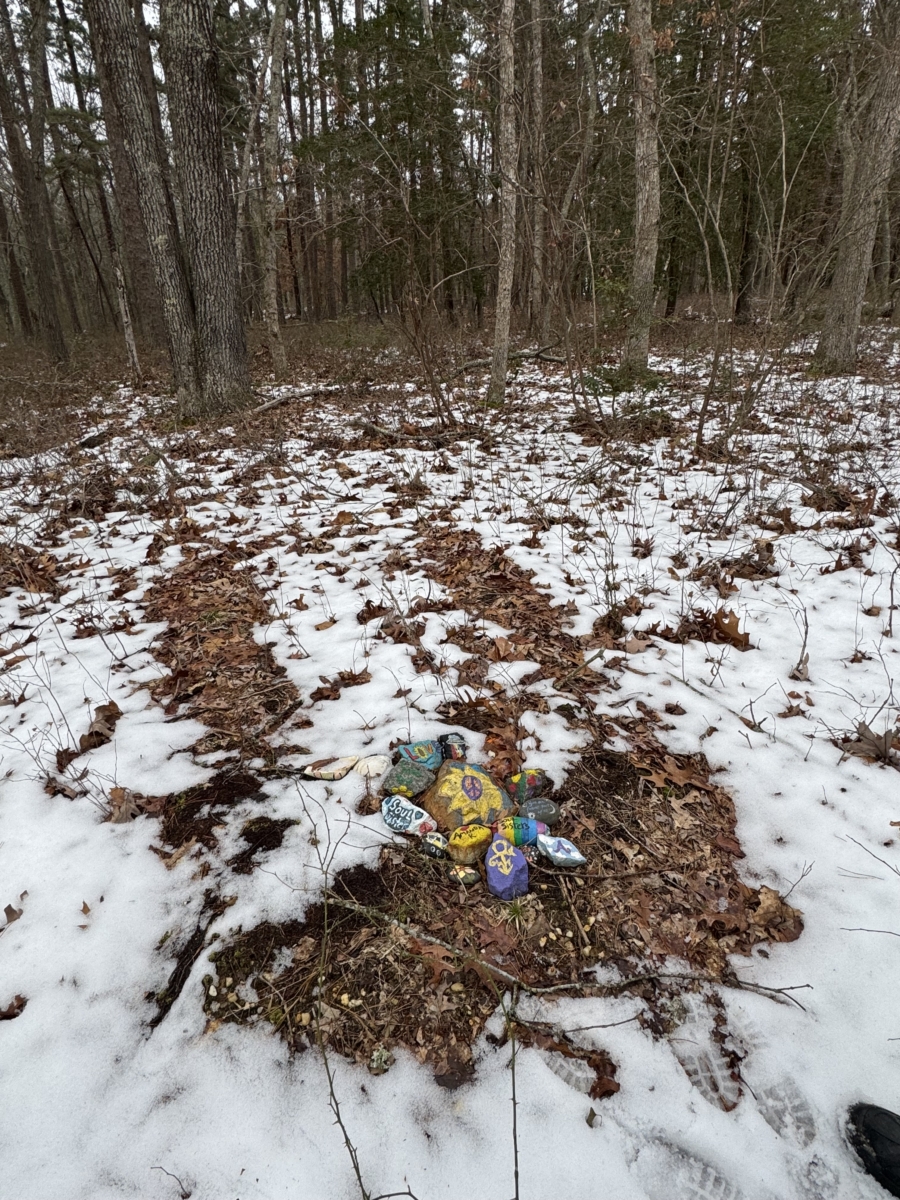
No graves in Steelmantown’s Green Burial Ground have stand-up grave markers, some aren’t even marked at all. Some have an engraved stone and others have rocks painted by the departed’s friends or family.
Only native plantings are permitted, the burial practices maintain the permeable soils by prohibiting concrete vaults, and the departed’s family can enjoy three miles of oak woods trails after a visit to a loved one’s grave.
Founder Ed Bixby has deep ties to the original Steelmantown Cemetery in that generations of his ancestors are buried there. Because of his care of the property and the practices he adopted for it, he became involved in the national movement of green cemeteries. By eliminating embalming chemicals, using biodegradable caskets or shrouds, and avoiding impermeable materials, green burials help safeguard aquifers. This is important because the cemetery’s grounds abut Mill Creek, a tributary of the Tuckahoe River, which is part of the Kirkwood-Cohansey aquifer.
When I toured Steelmantown Cemetery with my family, I found the historical setting and woods very peaceful. Admittedly, I was distracted by the fact that our tour guide left his car running throughout our lengthy visit. The irony of allowing one’s car to continue emitting toxic fumes while giving an ecofriendly burial tour was darkly humorous—and at the same time aggravating. I suppose the employee had not yet embraced the entire concept of the cemetery’s mission. Aside from my frustration with the car, and a couple of shabby buildings, I found the visit charming.
There were a lot of rules about burial methods and I suspect most cemeteries have their own lists, just different ones. Steelmantown’s rules focus on leaving the forest intact both environmentally and visually; no vertical grave markers are allowed. Their website offers a large range of rattan casket options, but a person’s remains can also be interred in a simple fabric shroud. Graves must be dug by hand; family members may participate in the burial process.
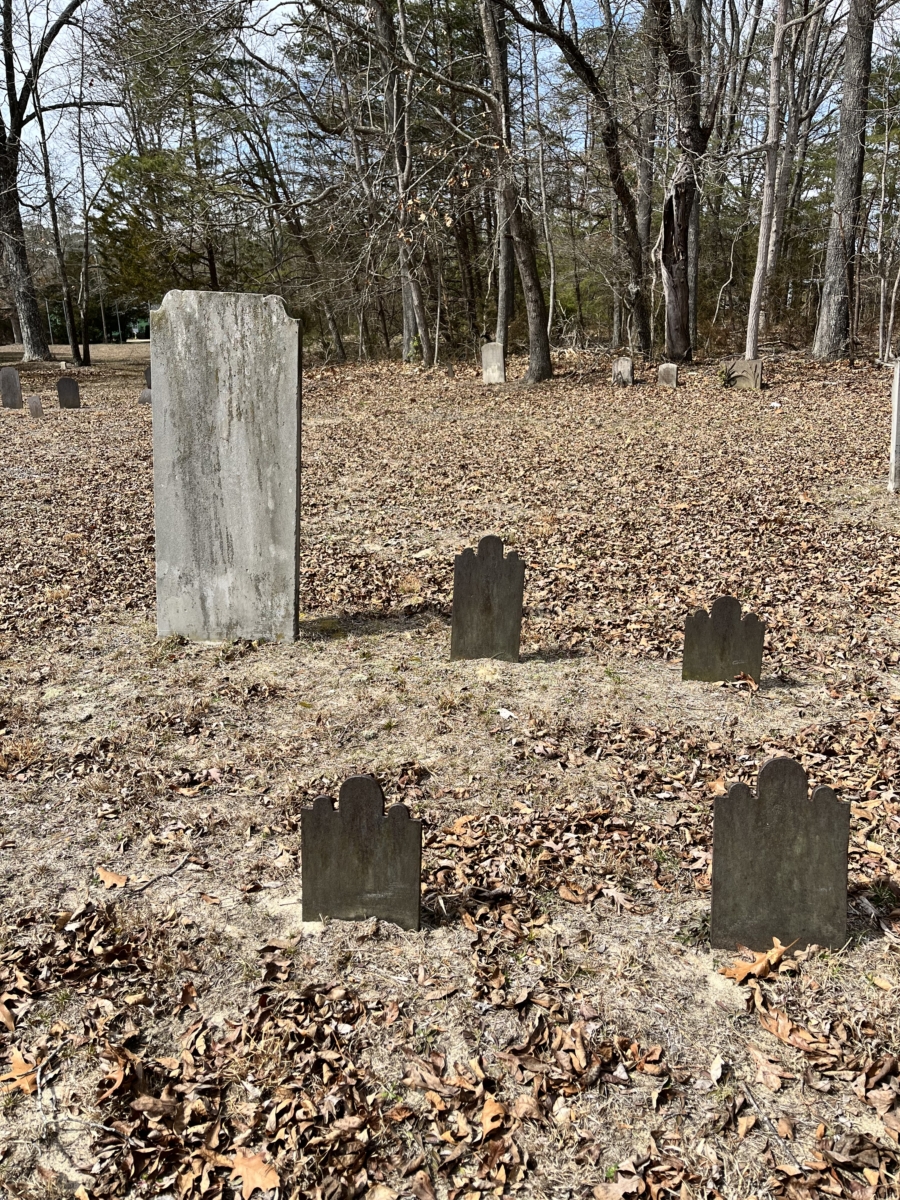
Colonial cast iron headstones at Cumberland United Methodist Cemetery next to Cumberland Pond, former site of Bud’s Furnace, manufacturer of cast iron tombstones and firebacks.
There is a walking path associated with Belleplain State Park that runs adjacent to the burial grounds. This is a less-utilized area of the park, a distance from the camping and welcome area and in the north end, near the intersection of Narrows Road and Washington Avenue. There are a lot of wetlands there associated with Mill Creek, which runs into the Tuckahoe River. The paths around the cemetery are moss-covered and feel wonderful underfoot. I can’t say if the moss is a native species, but most of the vegetation is clearly indigenous and it is a nice oak forest. There are no granite tombstones but rather simple stone markers. Clearly, family members put a bit of their own spin on decorations but anything that is not biodegradable or natural is prohibited.
Green burials are gaining in popularity. There are very few cemeteries that are solely green burial sites but there are many that are hybrid. The Green Burial Council (GBC) is a nonprofit organization that sets standards and certification for eco-friendly natural burial practices in North America. In 2017, GBC reported to American Association of Retired Persons that its list of green burial providers totaled only one in 2005, but by 2016 there were 150. In March of 2022, 350 green burial cemeteries were listed for the U.S. and Canada and by July 6, 2023, 418 cemeteries were offering some form of green burial. I suppose this trend will increase as funeral arrangements and costs continue to escalate.
Like all trends there are marketable items linked to its growth. Linen shrouds, wicker caskets, and biodegradable urns are but some of the products available in the industry, which is adapting to the increased demand. Many people are unaware that if a body is buried or cremated within 48 hours of death, chemical embalming can be avoided. Refrigeration is an alternative but that introduces complexities. Evidently there is no legal requirement in New Jersey for embalming but most funeral homes require it for public viewings. Furthermore, New Jersey health laws require bodies be buried, cremated, embalmed, or refrigerated within 48 hours of death.
Historians and anthropologists have always been fascinated by the burial rites of societies, and there are many people, including myself, who really enjoy wandering through cemeteries and reading interesting old grave markers. Certainly, pharaohs and the Mayans took tombstones to an extreme. Plagues, wars, life tales, and many other historic milestones can be revealed in cemeteries.
In Atlanta there is a graveyard tour during which the guide speaks of the departed as residents, and the visitor learns of people who created the fabric of that city. (See box above for a similar upcoming event at Siloam Cemetery!) And on many a grassy field or hillock, families sometimes spend the day with family, both living and dead.
Many of our region’s cemeteries were likewise established in parklike settings where loved ones would gather for family outings.
Green burial leaves a much lighter footprint on the planet, but for me it relays fewer stories. No standing tombstones to navigate and read—only some imprinted rocks. Steelmantown Cemetery offers a different kind of setting, one of natural reflection, and that in itself is thought-provoking.
Sources
Cremation.green website
Star of David Memorial Chapel, NJ
New Jersey State Funeral Directors Association, Inc. NJSFDA.org
Steelmantown Cemetery website
Eternally Green Funeral Solutions website
Spirits of Siloam Cemetery Living History Tour
On Saturday, April 25, from 11 a.m. to 2 p.m., you are invited to “meet” some of Siloam Cemetery’s most notable and interesting residents. This immersive and interactive tour will have first-person re-enactors. Tour at your own pace, a guide map will be provided. The Siloam Chapel will be open.
Tickets $10, available at https://www.zeffy.com/en-US/ticketing/the-spirits-of-siloam-living-history-tour
Proceeds benefit Siloam Cemetery and Vineland Historical Society.