No matter how you define it, spring is here. Whether you’re staying within the region or plan to travel, here’s what to expect across the United States throughout the spring season. By Brian Lada, AccuWeather meteorologist
Spring 2026 will be a season divided, with large areas of the country expected to have an early arrival of springlike weather, while millions face an extension of winter through the first day of the new season. Spring officially began at 10:46 a.m. EDT on Friday, March 20.
AccuWeather’s long-range forecasters say some areas will struggle to shake winter weather well into the season, including the chance for spring snow, while others transition quickly to warmth.
The Northeast, Midwest and the northern Plains will experience a seasonal tug-of-war throughout the upcoming season, with cold air winning the battle more often than springlike warmth, especially early in the season.
“A slower transition to persistent spring warmth can occur from the northern Rockies to the Northeast,” AccuWeather Long-Range Expert Paul Pastelok said. He added that there will be occasional warmups, but they will not last long before the next wave of chilly air arrives.
The extension of cold weather in the Plains, Midwest, and Great Lakes will keep the door open for snow, especially during the first half of the spring. It will also bring opportunities for late-season frost, which can impact farmers and backyard gardeners.
People across these regions could have to wait until May before warm weather settles in for good and winter coats can be put in the closet.
Spring warmth will arrive much faster across the southern half of the country, with fewer cool spells once winter loosens its grip.
“You go back to last year, it was pretty warm,” Pastelok said. “In fact, we had the second warmest spring on record last year. This area of the country again could feel early heat.”
In the Northwest, the switch from wintry to springlike weather will be delayed, unfolding around the middle of the season. “With the increasing warmth, snowmelt can be faster in April, leading to some isolated flooding near some rivers and streams,” Pastelok said.
The warm conditions and lack of springtime storms will cause drought to worsen, particularly across the Southwest.
“We are not expecting significant rainfall for this region. Spotty large fires can break out across this region during the spring,” Pastelok warned.
Drought may also worsen in parts of the Plains and Southeast.
“The Florida Peninsula may not see much in the way of consistent rainfall until late spring. This can lead to spotty large brush fires,” Pastelok said.
Severe weather will once again be a major springtime hazard in 2026, even if the season does not mirror the extreme tornado counts seen in 2025. The 1,559 tornadoes tallied last year were above the 15-year historical average of 1,392.
“We are leaning toward fewer tornado reports this spring compared to last year, but that does not mean the season will be quiet,” Pastelok warned. Instead, severe thunderstorms are more likely to trigger damaging winds and torrential rain compared to last year.
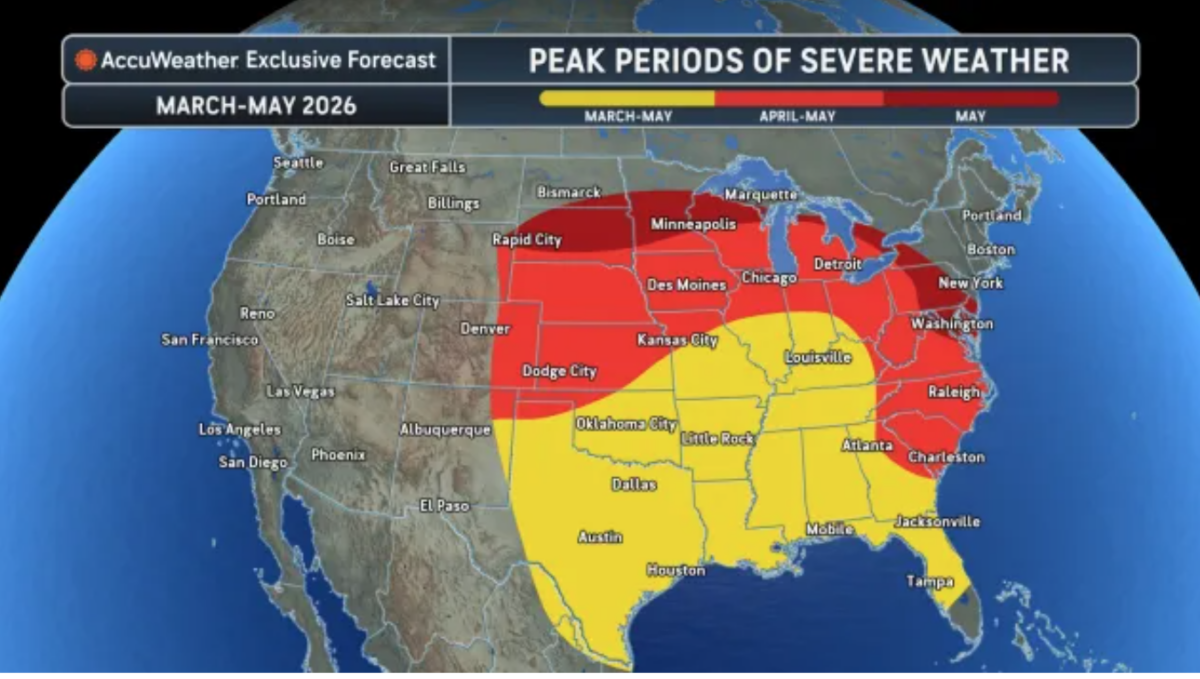
The greatest risk for severe weather will focus from the Mississippi Valley into the Gulf states, especially during March and April. In these areas, storms are more likely to produce damaging straight-line winds and flooding downpours, but tornadoes will still pose a threat.
Farther north, cooler and more stable air early in the season may limit severe weather initially across the north-central Plains and Midwest, but that will change later in April and into May.
Flood risk to rise as warmth settles in: The springtime weather pattern is likely to generate storms that track more slowly across the country, resulting in higher rainfall totals and elevating the risk of flooding.
“Slow-moving storms could produce heavier rain at times along the Gulf Coast, especially from Alabama to northern Florida,” Pastelok said. “Severe thunderstorms in March and April can lead to flash flooding and river flooding in parts of Missouri, Kentucky, the lower Ohio Valley as was the case in 2002.”
Melting snow in the spring can also cause some flooding issues across New England, the Northwest and parts of the Rockies.
Is It Spring Yet?
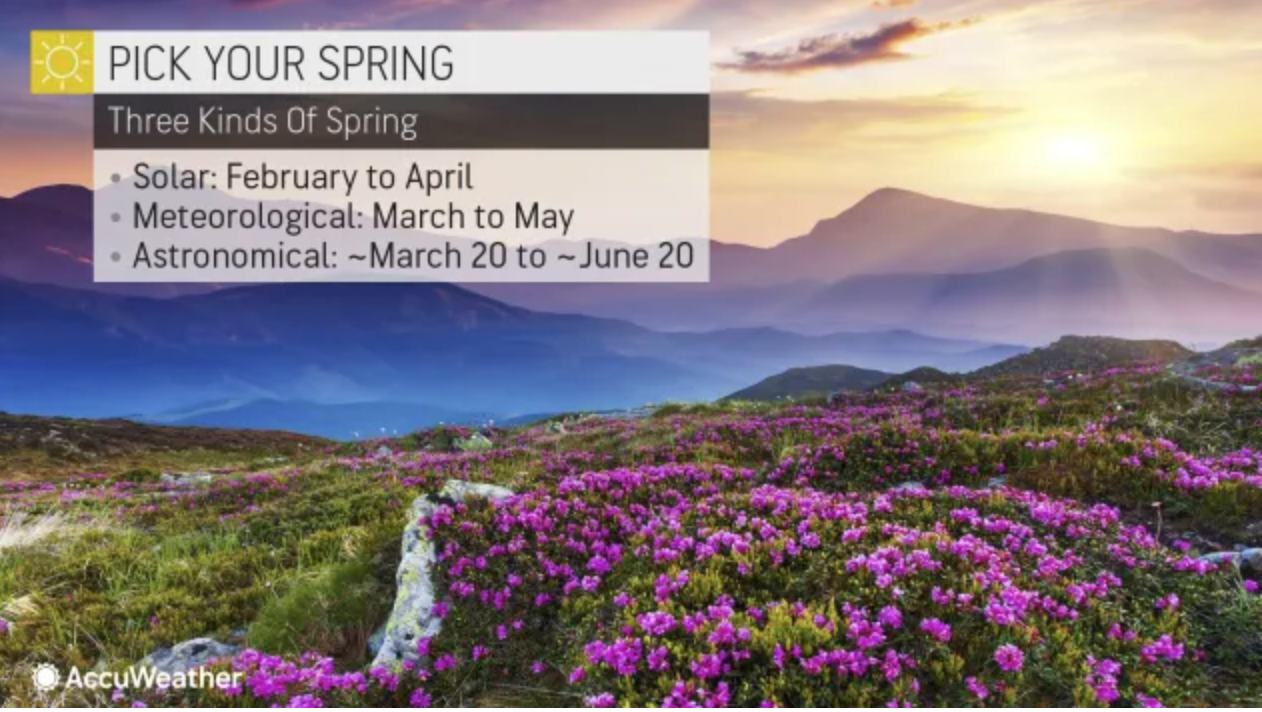
Spring is the season of change as Old Man Winter loosens its icy grip on North America and water weather gradually expands across the country. But the exact date of the first day of spring can vary from year to year — or person to person, depending on who you ask.
Meteorological spring began on Sunday, March 1, while astronomical spring started on the vernal equinox, which took place at 10:46 a.m. EDT on Friday, March 20. The exact time of the equinox varies from year to year due to leap years and the Earth’s elliptical-shaped orbit around the sun.
According to the National Centers for Environmental Information (NCEI), meteorological seasons were created because traditional seasons varied in length from 89 to 93 days and it was difficult for experts to compare statistics from one year to another.
Forecasters prefer to use meteorological spring because it is consistent year-to-year, unlike its astronomical counterpart. Meteorological seasons each also consist of three consecutive months:
•Meteorological spring comprises March, April and May
•Meteorological summer comprises June, July and August
•Meteorological autumn comprises September, October and November
•Meteorological winter comprises December, January and February
The month of March is associated with a variety of folklore, including the famous proverb, “March comes in like a lion and goes out like a lamb.” It’s one of many sayings from years gone by that attempt to predict the weather.
And there’s the legend of balancing eggs on their ends only on the first day of spring because of the position of the Earth’s axis and a perceived change in gravity. But as tedious as it might be to prop a raw egg on a table and not have it fall—it’s a myth and can be done any day of the year on a flat surface.
—Brian Lada, AccuWeather meteorologist