Vineland Residents Protest $17B Microsoft-Linked AI Data Center Project
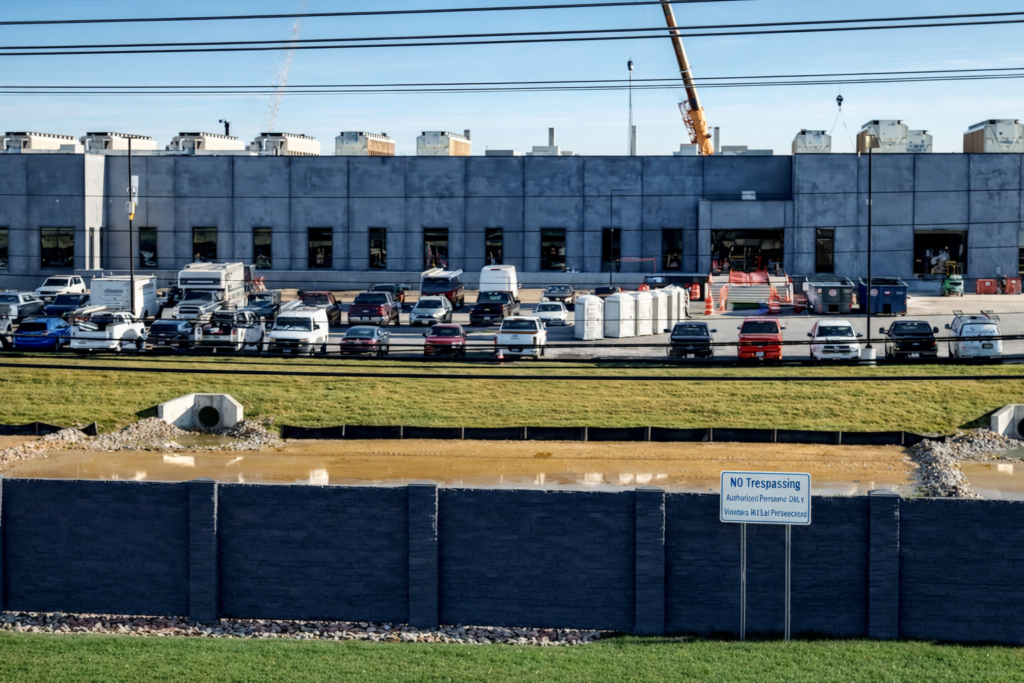
Residents in Vineland are voicing growing opposition to a large artificial intelligence data center under construction in the South Jersey city, raising questions about noise, water use, electricity demand, and potential environmental effects tied to the project.
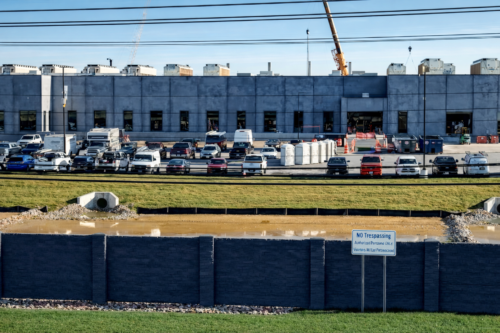
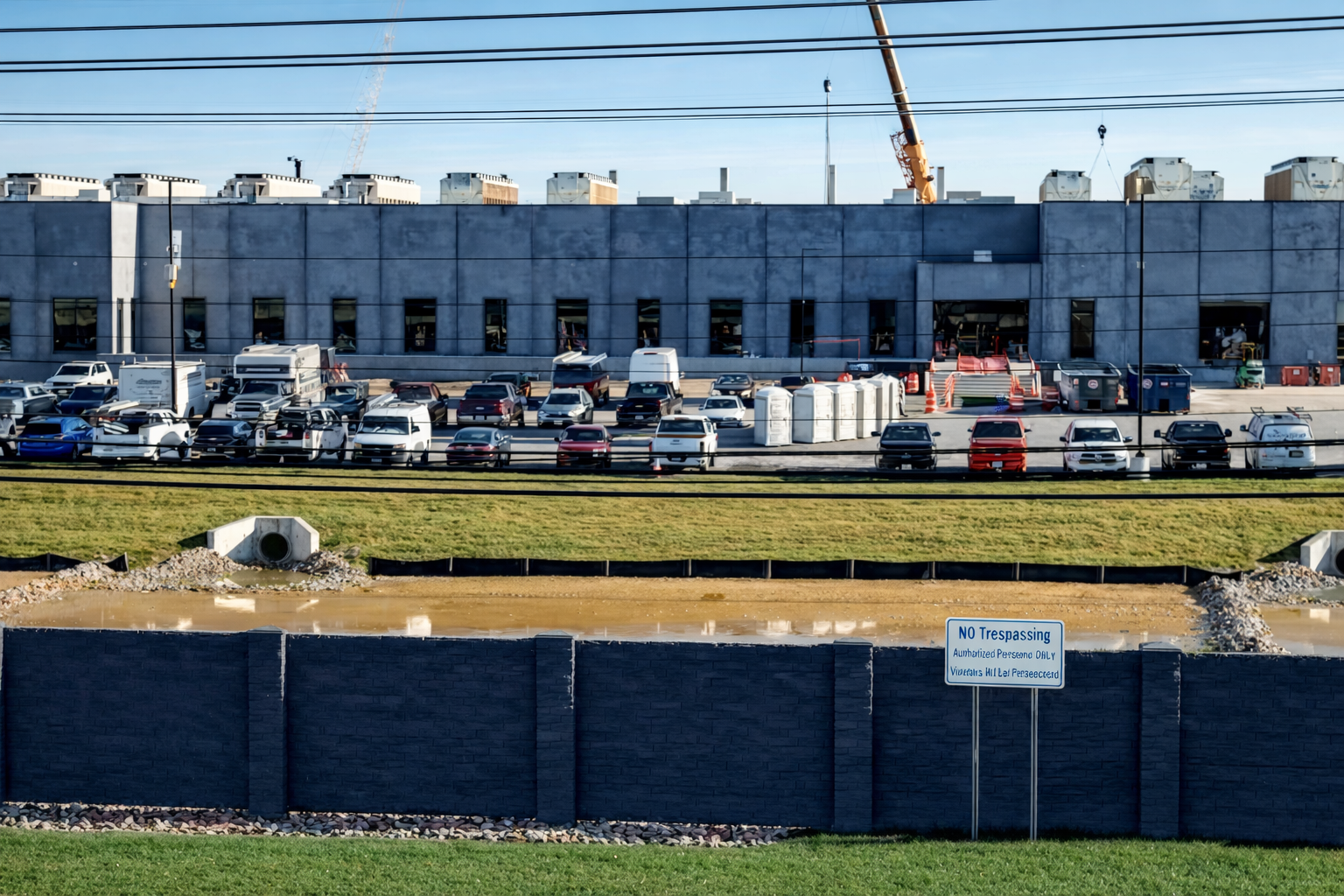
About 40 miles south of Philadelphia, a 2.6 million-square-foot data center complex — comparable in size to 45 football fields — is under development. DataOne is building the facility for the Nebius Group under a $17 billion deal to supply AI computing power to Microsoft.
The hyperscale facility is expected to require about 300 megawatts of electricity, equivalent to the annual power demand of at least 65,000 homes.
DataOne says 85% of the electricity used at the site will be produced with natural gas. The gas will come through a pipeline connected to the facility. The company has also requested approval to install a liquefied natural gas storage tank in case the pipeline supply is interrupted.
Residents have taken to social media in recent weeks to oppose the development. Public protests and community meetings have followed as questions about the project increased.
About 100 people gathered at Giampietro Memorial Park in Vineland during a rally against the data center and artificial intelligence infrastructure. Demonstrators held protest signs and shouted criticism of local government officials who supported the construction of the facility.
The rally was organized by Bayly Winder, a Democratic candidate running for the U.S. House of Representatives against Republican incumbent Jeff Van Drew. Winder is calling for a national moratorium on new data centers.
The demand for data centers has increased as artificial intelligence technology expands. These facilities house servers that run internet services worldwide. The administration of President Donald Trump announced plans last year to accelerate AI development with limited regulatory oversight.
Vineland residents said the effects of the project are already being felt near the construction site.
People living nearby describe hearing a persistent humming or whining metallic sound that carries across neighborhoods during nighttime hours.
Michael Gentile, who lives about half a mile from the site, said the sound has affected his sleep.
“The anxiety, just hearing that noise, it’s going to drive people crazy,” Gentile said. “It’s driving me crazy, my wife crazy. Last night she was up; she couldn’t sleep.”
He also expressed concern about the financial effects on homeowners.
“I don’t want my property values to go down. I don’t want my utilities to go up,” Gentile said.
The developer says the humming sound is tied to construction and says the project is not violating local ordinances.
Noise is one of several concerns raised by residents. Questions about water use have also drawn attention.
DataOne estimates the facility could use about 20 million gallons of water each year to cool equipment as servers operate continuously. Data centers rely on water cooling systems to prevent computer hardware from overheating.
The company says its water consumption will be lower than that of some industrial facilities already operating in Vineland. DataOne also says the data center will operate with a closed-loop system designed to recycle water.
Under that system, an initial supply of water would be used to prime the cooling system. Additional water would only be needed occasionally to top off the system.
Residents have questioned whether the system could still affect water resources.
Matt Williams, a Vineland resident and organizer of Sustain SJ, a group advocating for clean air and responsible government, described concerns raised by people in the community.
“The list is kind of the same what you hear everywhere; the water usage, the power and really just the noise is really start to come to light for people,” Williams said in an interview with NJ Spotlight News.
Williams lives about four miles from the construction site. Residents closer to the project have reported hearing a constant humming sound during nighttime hours.
“People that live closer to the site — me, personally, I’m about four miles — but from what I understand within like half a mile or a mile or so, there’s a loud, constant hum going on like, later hours of the night,” he said. “And it’s disturbing residents.”
Williams said residents were told the cooling system would require an initial water allocation followed by occasional refills.
“What we’re told is that they would use an initial allocation to prime the system, and then any additional use would be to top off the system,” Williams said.
Vineland has experienced drought conditions for nearly two years. Residents said the drought has raised concerns about any additional water demand.
Environmental advocates have also warned that closed-loop systems can still release contaminated water into groundwater.
Williams said the data center site is located in a wellhead protection area regulated by the New Jersey Department of Environmental Protection.
“That specific site is more susceptible to groundwater contamination,” he said. “That immediately affects our water supply.”
The surrounding region includes farmland, and residents said groundwater contamination could affect agricultural operations. Vineland is widely known as a farming community.
Electricity demand linked to the facility has also raised concerns.
While DataOne says most power will be generated on site with natural gas, the remaining electricity will likely come from the regional grid.
Vineland operates its own municipal utility. Williams said the city’s power system functions as a peaker system that supplements the electricity supply during periods of high demand.
“That still implies that they’re going to have to take an electric pool off of somewhere,” Williams said. “Whether it’s our substation or Atlantic City Electric’s substation nearby.”
How electricity demand from the data center could affect local power rates is unclear.
“I’m not sure,” Williams said. “I don’t think we would see that until maybe our next auction.”
The project’s revised site plan also includes a liquefied natural gas storage tank.
Williams said he believes fuel would need to be delivered by truck.
“From what I understand of their revised site plan, there’s a liquid natural gas storage tank on site,” he said. “I don’t think that’s connected to a direct pipeline. So trucks have to bring that gas on site one way or another.”
Residents opposing the project also question the direct benefits to the city.
Zac Landicini, who lives about three miles from the facility, said the development does not provide a service residents rely on.
“AI data centers are not essential to life in Vineland,” Landicini said. “Nobody in Vineland needs an AI data center like they need a water utility or a power utility. It does nothing in terms of its product to directly benefit Vineland residents.”
DataOne says the facility will create jobs and contribute to the city’s tax base.
The company estimates the construction phase will create about 500 jobs. Once operational, the facility is expected to employ between 150 and 200 workers. Another estimate from the company places permanent employment at more than 200 full-time workers.
City leaders have backed the project. Vineland’s mayor and the City Council president approved a tax exemption for DataOne under a five-year plan.
Developers have also described community programs connected to the facility.
One proposal involves a vertical farm described as a “giga-farm.” The farm would use heat and carbon dioxide waste from the data center to grow fruits and vegetables.
Produce from the operation would be distributed through a program described as a “digital citizens cart,” which would provide food to lower-income residents.
Williams said the proposal was presented during a town hall meeting.
“There were very specific claims made at that town hall,” he said. “Honestly, I would love to see those claims held onto paper.”
He said residents were told the cooling system could reclaim water that would then be redistributed to the city.
Williams said residents have not received further details about those claims since the company’s chief executive discussed them in January.
“We’ve kind of been left in the dark since the CEO made that claim,” he said.
Construction of the project began after the first phase received approval in June 2024. That phase includes a 130,000-square-foot data center building. According to Nebius, at least three data rooms are already operating.
The next phase would expand the facility with a two-story building covering 588,000 square feet. The expansion plan also includes a power generation facility, water infrastructure and the liquefied natural gas system.
A Vineland Planning Board meeting scheduled for Thursday to review plans tied to the second phase was postponed. City officials said the meeting will now take place on May 28.
A city spokesperson said the meeting was postponed at the request of DataOne. The company did not immediately respond to a request for comment.
The postponement followed the rally that drew more than 100 residents to the park.
Winder said the project could become one of the largest data centers on the East Coast.
Vineland spans about 69 square miles, the largest city in New Jersey by land area. The city is located in Cumberland County, the poorest county in the state.
Across New Jersey, about 80 data centers operate, according to DataCenterMap. Most are located in the northern half of the state.
The Vineland project would be the first data center of that scale in South Jersey.
Williams said other communities facing proposals for similar facilities should become involved in local policy decisions.
“Really get involved with your local government to make sure that they have data centers defined in their city codes and ordinances,” Williams said.
“Unfortunately, in Vineland, the rules weren’t made, so it caught a lot of people by surprise.”