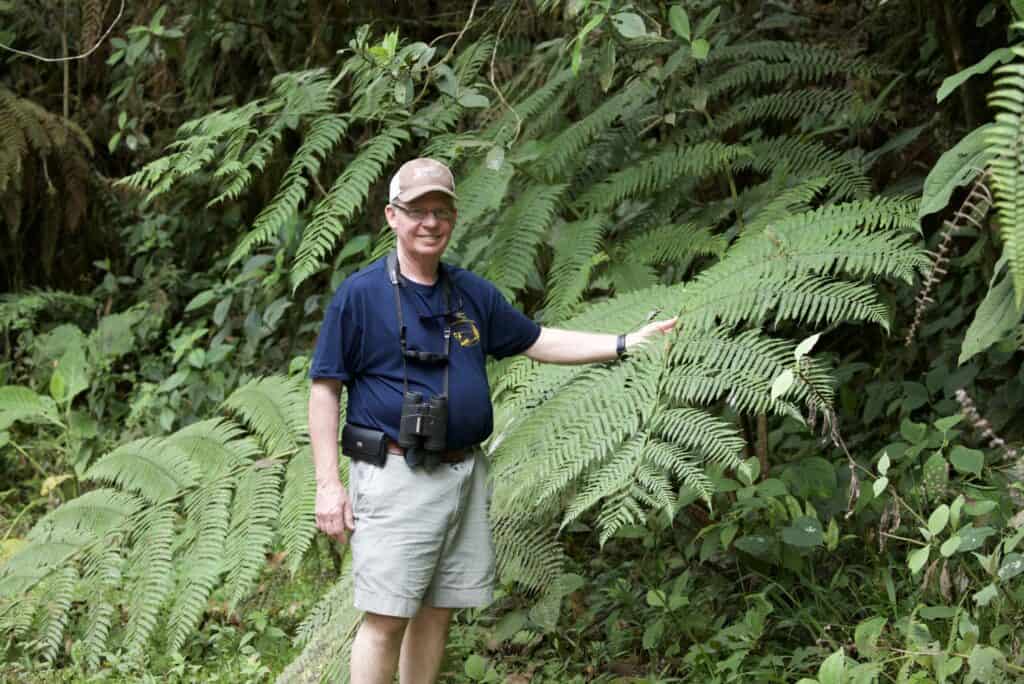
Fern sizes vary in different climates. In the lush cloud and tropical montane rainforests of Ecuador ferns grow enormous fronds. Near Los Bancos, Ecuador where the coldest month is October the average low is 76°F and the high is 88°F, the hottest month is March with a 100°F high and a 79°F low. Photo: J. Morton Galetto
Last week our column explored the natural history of ferns, their relative scarcity in comparison to flowering plants, their reproduction, and some folklore—primarily using ebony spleenwort as an example.
Author Tony Klock discussed their evolution 300 million to 400 million years ago, compared to seed-producing plants that developed approximately 130 million years ago during the Cretaceous period.
This week the focus will be on the recovery role that ferns play in ecosystems.
After disturbances, ferns are sometimes among the first plants to colonize an area. This attribute makes them known as a “pioneer species.” Disturbances might include prior development or clearing, logging, or forest fires. Ferns can lay the groundwork for trees to re-emerge; this is referred to as ecological succession. Their root systems can stabilize the soil, promoting conditions for other plants to grow.
In prior disturbance sites such as around old foundations of former farmhouses or barns we often see ferns take hold. Old foundations often have poor drainage, so porous materials like brick, stone, and old concrete blocks can offer a damp milieu in which ferns thrive. When lands are preserved, they are often former farms in which the structures no longer exist, but foundations remain. On hikes in southern New Jersey you will often see these little pioneers establish themselves at former homesteads.
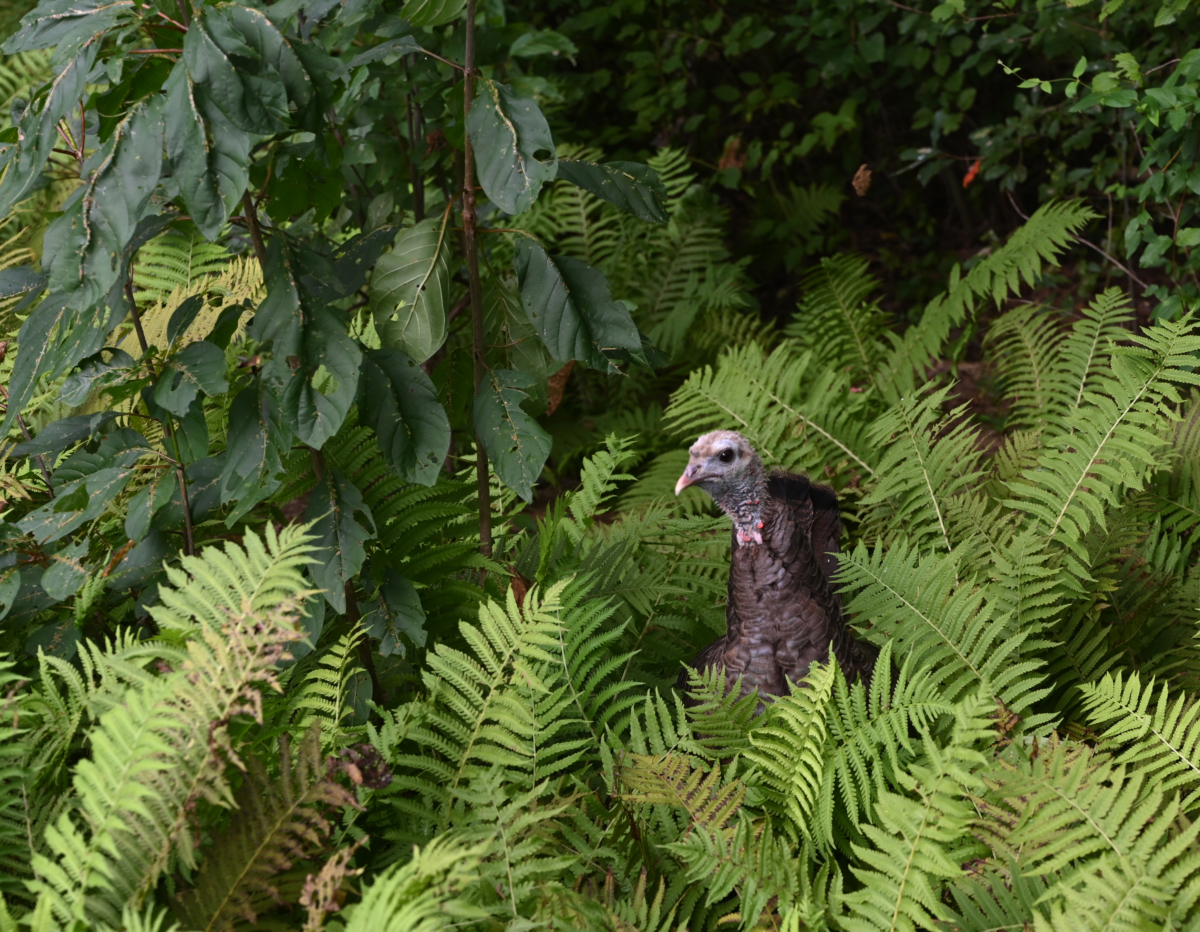
This hen bird turkey took her chicks into a large bed of ostrich ferns as soon as they hatched and dried. Ferns offer shelter and concealment to many animals. Photo: J. Morton Galetto
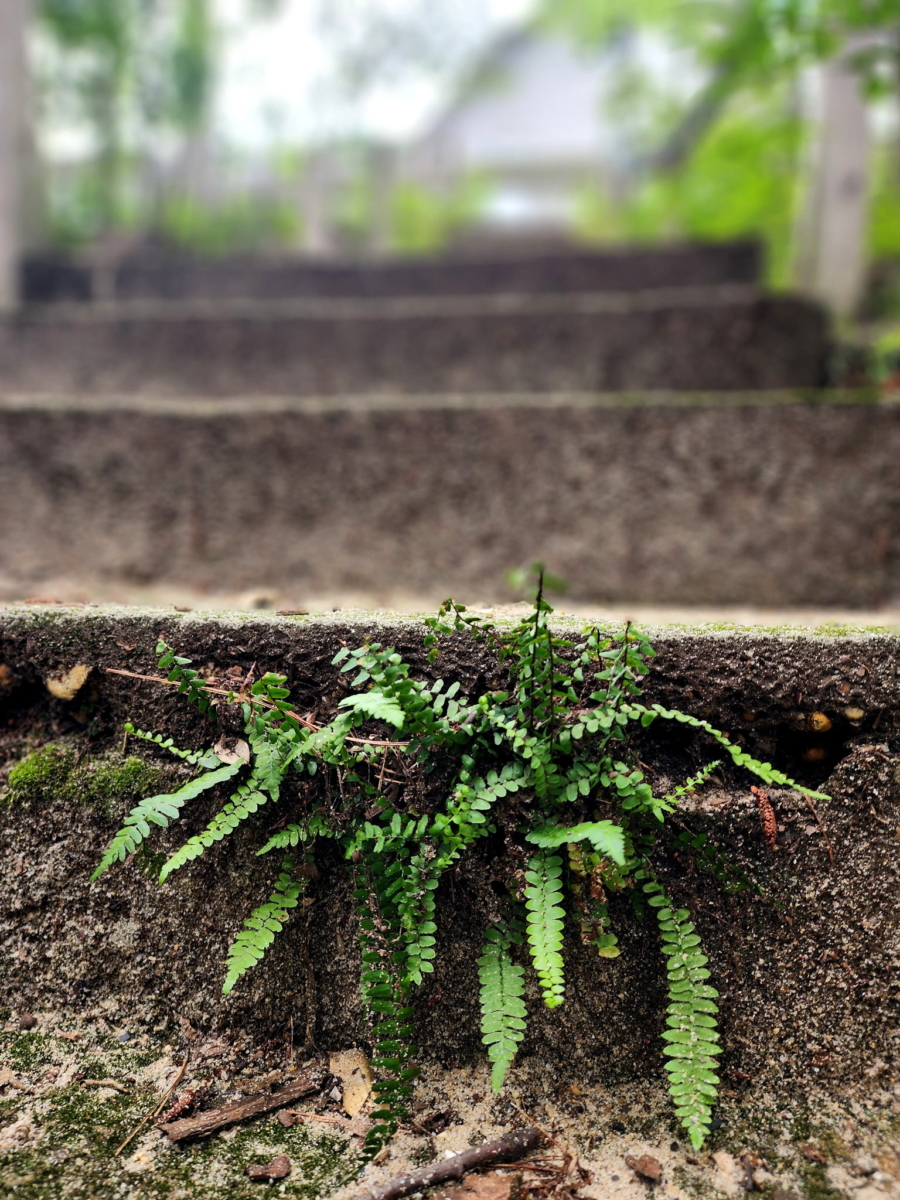
Ferns will often be among the first plants to take over a developed landscape, like this ebony spleenwort emerging from a crack in concrete stairs. Old foundations often offer the moisture that ferns seek. Photo: Tony Klock
Ferns themselves hold moisture, increase access to nutrients, and reduce erosion. Conservation projects will often include ferns in restoration projects to take advantage of these traits.
The annual decomposition of fern fronds (their leafy structure) adds organic matter and nutrients to the soil. Their roots reduce erosion by holding water that might otherwise run off, especially in steeply sloped areas. Their root system also acts as a filter, improving water quality. Some species of ferns can actually absorb heavy metals and other pollutants.
In general we think of plants as being competitors in the ecosystem, vying for real estate. NASA scientists have found an interesting niche that ferns play in the aftermath of environmental disaster, not only in the instance of common occurrences like forest fires, but in the event of large-scale upheavals such as asteroid impacts and volcanic eruptions. Geologists and paleontologists believe that ferns act as “facilitators” that help other plants and animals to re-establish themselves in a wasted landscape.
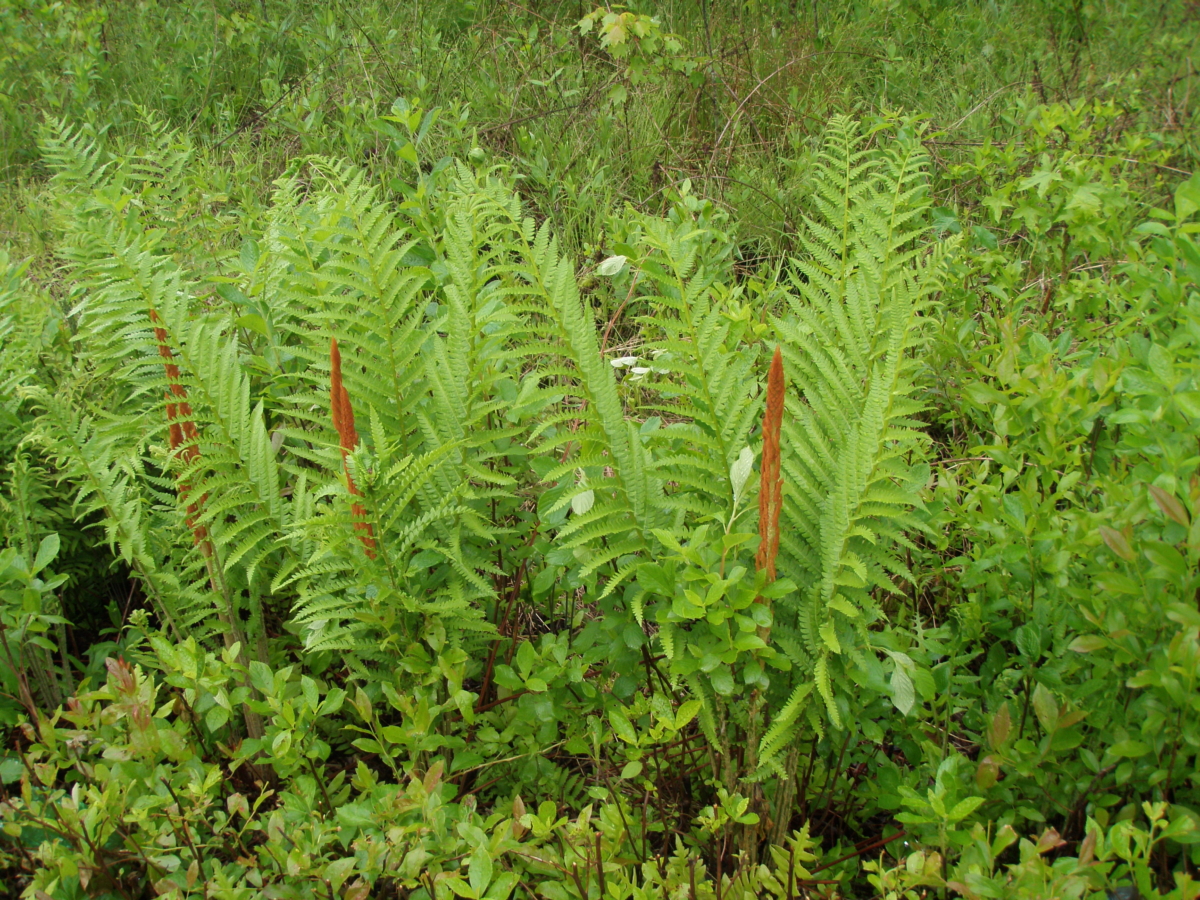
Cinnamon ferns are known for their showy, cinnamon-colored fertile fronds, which appear in spring and fall, contrasting with the green, sterile fronds. The range of these ferns is the eastern half of north America. These are from along a Millville waterfront trail. Photo: J. Morton Galetto
Beyond enriching soils and stabilizing ground, scientists are suggesting that ferns mediate competition between other organisms, achieving greater diversity. Their perspective is examining positive and complementary interactions as opposed to competition—in other words, community ecology. Fossilized records of this ancient species offer insight into the role ferns play in ecosystem recovery. Ferns are globally distributed and adapt to a great number of habitats, increasing their likelihood of playing an important role where large-scale disasters occur.
The lead author studying the resilience of ferns is Lauren Azevedo Schmidt, University of California, Davis. She explains, “The Cretaceous – Paleogene [K-Pg] extinction event reworked Earth’s biosphere, resulting in approximately 75% of species going extinct, with up to 90% of plants going extinct.” Nonetheless, ferns persisted.
NASA believes this gives some context to understanding how life rebounds through cataclysmic extremes and also has implications for the possibility of life evolving on other planets—the field of science known as exobiology. By studying our planet’s evolution through extreme occurrences we begin to understand the origins, evolution, and distribution of life elsewhere in the universe. Azevedo Schmidt and her study colleagues believe that ferns actually transformed the Earth’s biosphere in the wake of an extinction event and their mediative qualities and persistence were transformative.
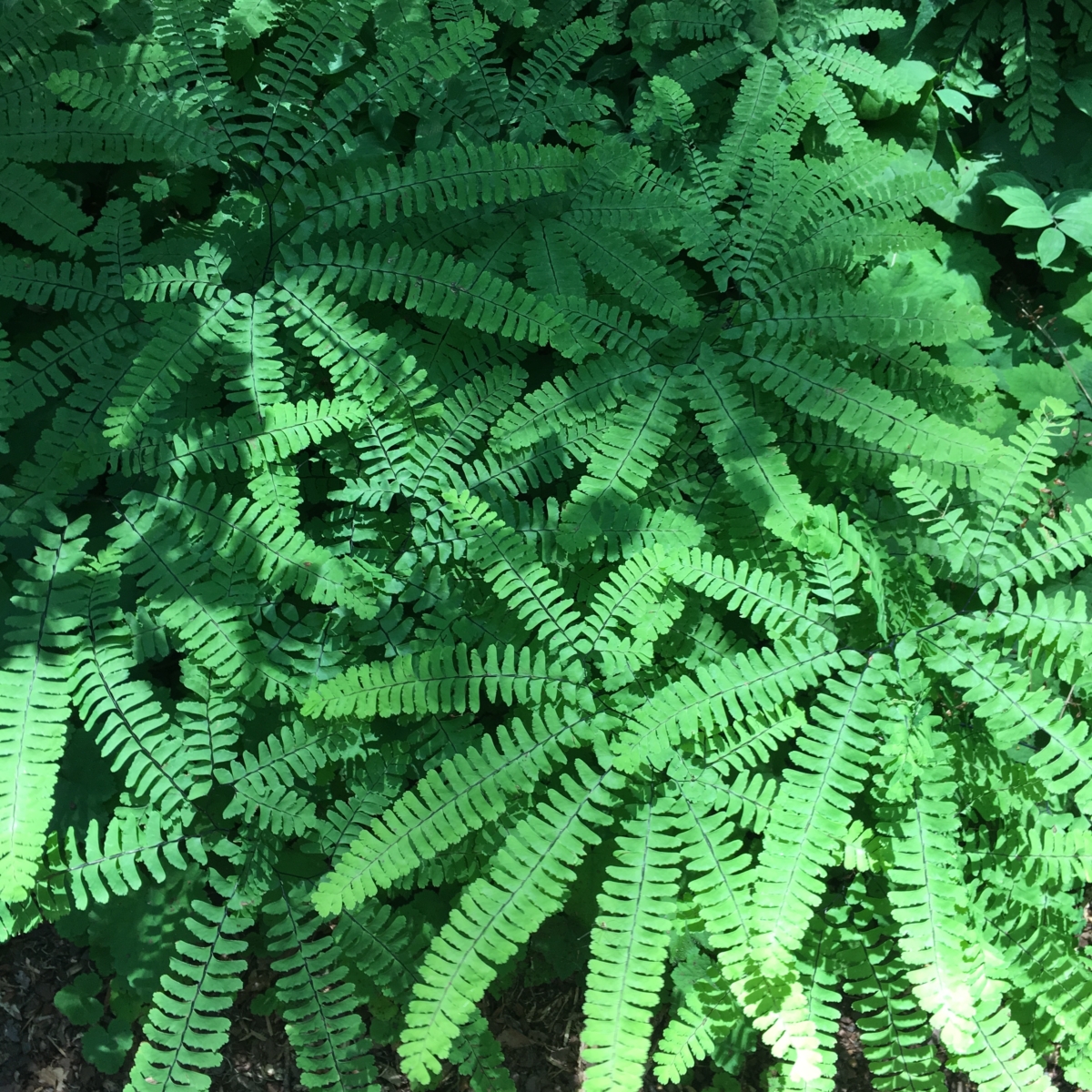
One of the loveliest of North America’s ferns is the maiden hair. It is extant in and native to the eastern half of N. America (excluding FL). Mt. Cuba Center, Hockessin, DE – native garden. Photo: J. Morton Galetto
Ferns’ roles continue to be vital. These plants provide shelter for animals like insects, mammals, reptiles, and amphibians. Some insects rely on ferns, so animals depending on insects benefit from them as well. Fern foliage can influence temperatures, creating microclimates and providing a cool, moist environment for other organisms.
If you have a landscaped yard, ferns make a lovely ground cover in moist shady areas. Some landscapers suggest using them around other plantings as a substitute for mulch. If you find deer and rabbits are a nuisance in your garden, you’ll be pleased to learn that they usually avoid eating ferns. However, our rabbits love using them for cover, much to our Brittany spaniel Hey Mambo Italiano’s frustration, since they give her the slip by ducking for shelter under the dense foliage.
On its website, Edge of the Woods Nursery offers a nice writeup of a number of native fern species. They also suggest the pocket guidebook, Identifying Ferns the Easy Way. I hope you have gained some interesting insights into the key role ferns have played in the healing and shaping of our planet.
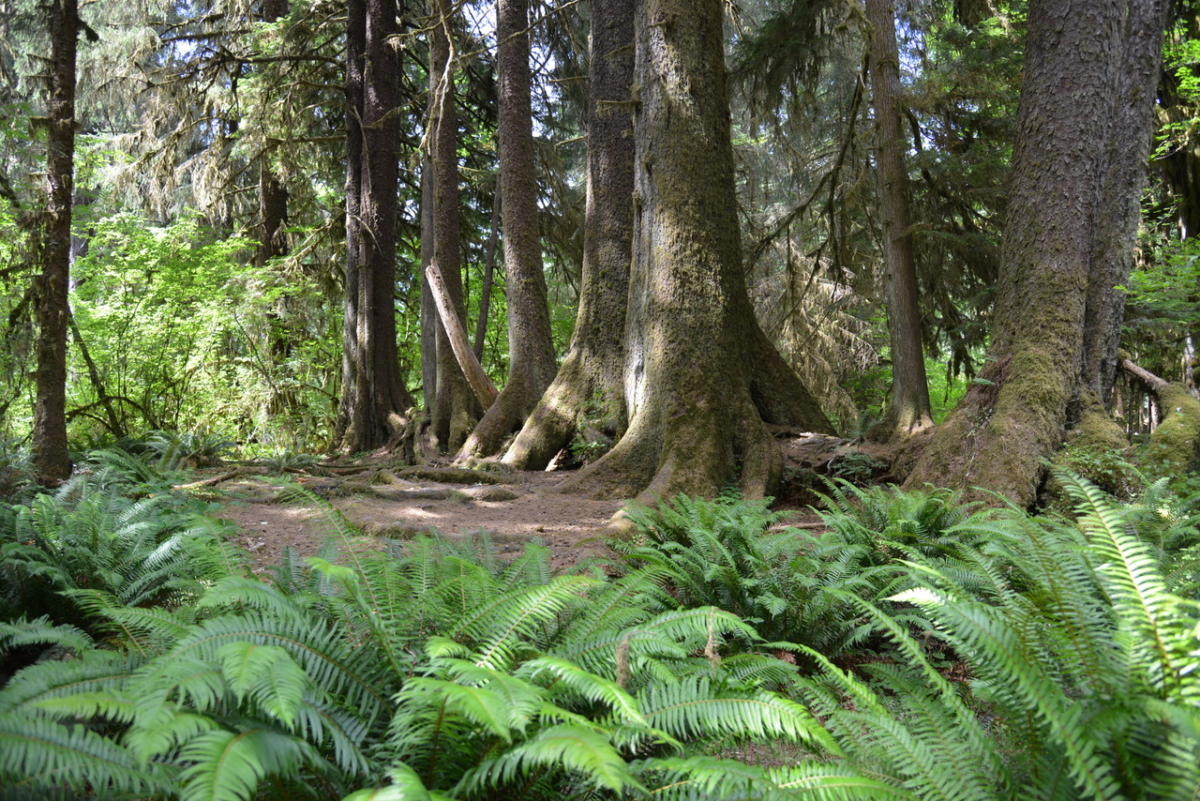
Our nation’s Pacific Northwestern coastal forests like Hoh Rain Forest in the Olympic National Park grows 3-4 foot tall ferns below massive spruce trees. The forest has a yearly annual rainfall of 140 inches. In this climate the ferns and mosses thrive. Average summer temperatures don’t exceed 70° Fahrenheit. This unique environment is home to the endangered spotted owl. Photo: J. Morton Galetto
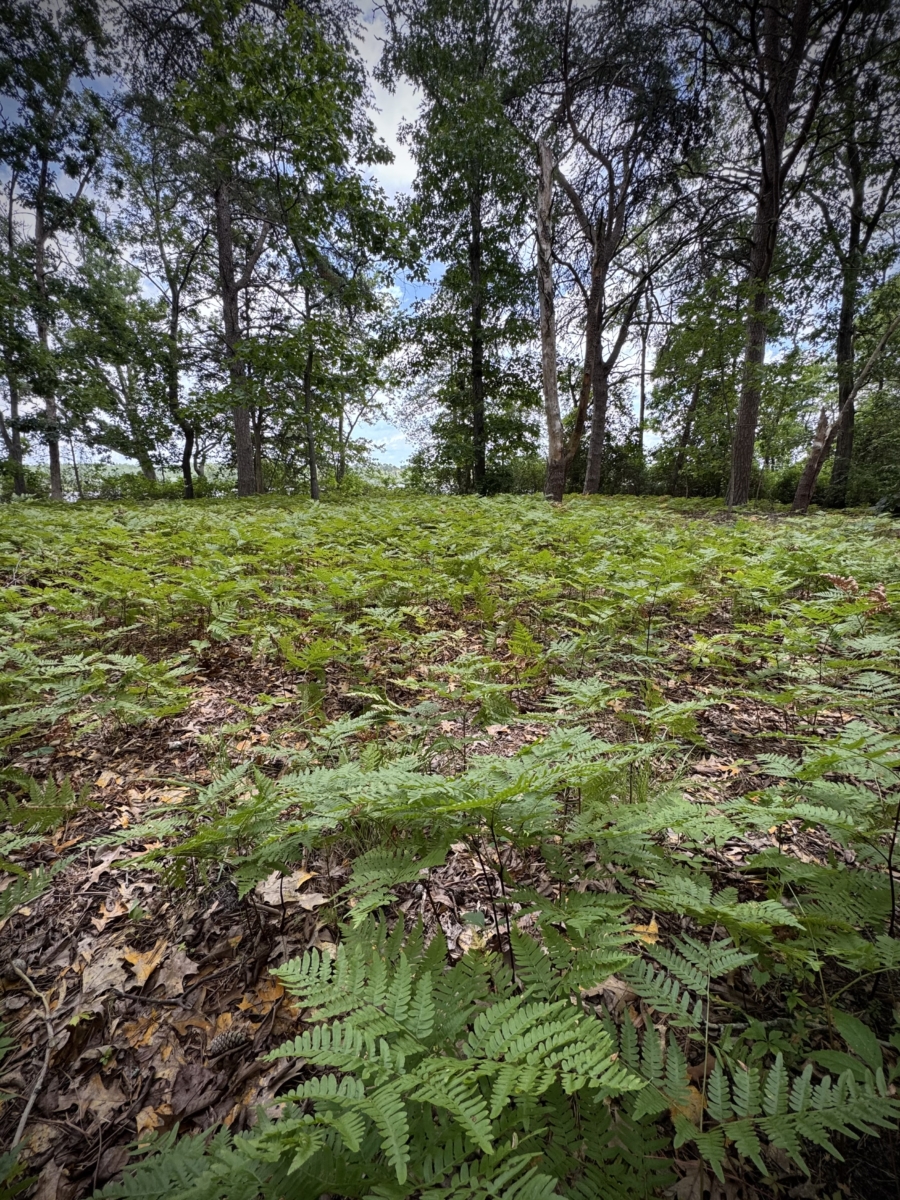
In southern New Jersey bracken ferns will often be the first to carpet a clearing in the forest. Photo: J. Morton Galetto
Sources
NASA Study Shows Ferns Facilitate Recovery from Environmental Disaster, Science.NASA.gov.
“Ferns as facilitators of community recovery following biotic upheaval,” Lauren Azevedo Schmidt, et al. The Journal BioScience.
“Native Ferns,” Edge of the Woods nursery.co
Heavy metal and arsenic accumulating fern species as potential ecological indicators in As-contaminated abandoned mines, J. Chang, I. Yoon, K. Kim. Ecological Indicators, Volume 9, Issue 6, November 2009, Pages 1275-1279